
Market Overview and Demand Drivers
Why South African Homeowners Are Choosing Aluminium Folding Doors
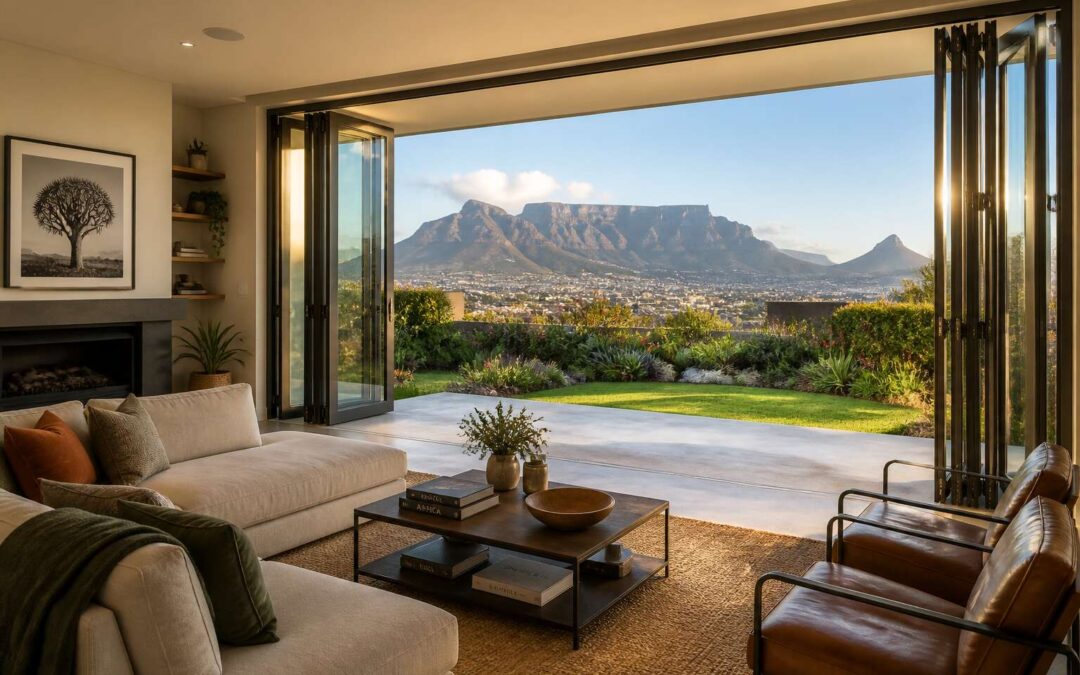
South Africa’s aluminium folding door market has expanded steadily. What once appeared only in high-end coastal architecture now features in suburban renovations and semi-detached homes. The preference is practical: a folding system allows complete wall removal to the exterior, an attractive prospect in a country known for mild winters and long summer evenings.
The financial logic is equally persuasive. Homeowners compare aluminium folding doors prices in south africa against the measurable uplift in property value. Agents in Cape Town, Durban, and Pretoria confirm that homes with these systems draw stronger offers.
Demand emerges from distinct pressures.
- Ongoing load shedding makes natural ventilation more valuable than air conditioning
- Security concerns push buyers toward multi point locking and laminated glazing
- Entertaining traditions require unrestricted movement between kitchen and garden
These pressures shape how buyers interpret aluminium folding doors prices in south africa. A quote is seldom judged alone; it is weighed against the cost of alternative glass systems and the difficulty of retrofitting later.
Local Manufacturing Versus Imported Systems
Two supply chains contend for every aluminium folding doors project in the country. Local extruders offer custom profiles, shorter lead times, and direct accountability. Imported European systems bring precision hardware and designer finishes, but their landed cost depends on the rand and shipping schedules. That contest settles aluminium folding doors prices in south africa more than any single factor.
Demand concentrates in coastal metros and highveld security estates, and the spread is widening each year!
- Local profiles dominate the middle band through after sales support
- Imported systems capture premium projects and commercial tenders
Warranty terms, spare part availability, and installation expertise attach to these two channels. Buyers who weigh aluminium folding doors prices in south africa without examining the supply chain behind each quote, in my experience, often misjudge the true cost of ownership.
Currency Movements and Their Effect on Pricing
Interest rates drop and coastal renovations explode. Load shedding eases and highveld homeowners suddenly remember their patios exist. Demand clusters hard around Cape Town’s Atlantic seaboard and Pretoria’s security estates, and each cluster negotiates differently.
- Coastal buyers prioritise corrosion resistance over cost.
- Highveld buyers chase security ratings and thermal performance.
Then the rand moves, and everything gets interesting! A weak exchange rate inflates the landed cost of imported systems, which drags up aluminium folding doors prices in south africa across the board. Local extruders hold their quotes steady for weeks, which is why clever buyers ask about currency exposure before signing anything.
Key Factors That Determine the Final Price
Aluminium Grade and Profile Thickness
The grade of aluminium changes the final figure first. Extrusions rated 6063-T6 resist corrosion and deformation, so they cost more. For a coastal Cape Town home, that upgrade is non-negotiable, and it reflects directly in aluminium folding doors prices in south africa.
Profile thickness is the second factor. A 1.2 mm wall may handle a small opening, but a 2.5 mm profile carries double glazing and wide spans. More billet means more cost. I have seen quotes rise by 30 percent for heavy-duty profiles!
- 6060 grade for inland installation
- 6063-T6 for coastal homes
- Thickness from 1.2 mm to 3.0 mm
South African regulations tie door strength to wind zones. Durban’s humidity and Johannesburg’s storms demand different profiles, and each shifts the total. Request the exact grade and thickness, because that data defines value better than any claim.
Glass Specifications and Safety Glazing Requirements
Glass carries a large share of the final quotation. A 6mm toughened pane appears modest, yet the coating, the air gap, and the frame seals decide the final figure. Double glazing with low-E glass is common in Gauteng to limit heat transfer, while laminated glass provides security in Cape Town’s windy suburbs. I always ask suppliers to specify the exact interlayer and coating because those details carry real rand value.
– Toughened glass for impact resistance
– Laminated safety glass for forced entry protection
– Low-E double glazing for thermal efficiency
Each specification reshapes the material cost, and the quote follows. Safety glazing requirements in SANS 10137 often mandate specific panes near floors and doors, so the supplier may have no choice in the matter. That regulation, not preference, can lift aluminium folding doors prices in south africa.
Track Systems, Rollers and Folding Hardware Quality
The track system carries every panel. A cheap track might save money upfront, but it will wear and shift within a year. Rollers deserve scrutiny too! Stainless steel bearings, nylon wheels, and adjustable hinges bear the daily load. I have seen quotes drop by thousands when suppliers swap branded hardware for generic alternatives! That difference directly shapes aluminium folding doors prices in south africa.
- Self-lubricating roller carriages
- Corrosion resistant tracks for coastal air
- Load tested hinges for heavy panes
Each component adds real cost. A folding door with eight panels relies on every wheel and pivot. The quality of these small parts determines whether the door glides for decades or jams by winter.
Custom Sizing Versus Standard Door Configurations
Custom sizing is where the price curve gets steep. A standard door configuration uses stocked aluminium profiles, pre drilled hinge points, and predictable glass cut sizes. The factory runs on repeat. That predictability keeps aluminium folding doors prices in south africa within a reasonable bracket.
Ask for an opening that falls outside the metric module and the process changes. Each panel gets measured, cut, and drilled individually. Glass is cut to odd dimensions. Hardware mounting points shift. Labour time rises, offcuts become waste, and a 300 mm difference in height or width can push the quote up noticeably.
- Height above 2400 mm requires heavier profiles
- Stacking space forces custom hinge placement
- Non square openings demand site measurement and shimming
Standard configurations win on price. Custom sizing wins on fit. Measure the actual opening before you compare quotes.
Brand Reputation and Warranty Length
Brand reputation acts as a silent surcharge on every quotation. Established names in the local market spend years refining extrusion tolerances and corrosion resistance. They also back their work with warranties that stretch past five years. A lesser known supplier may offer a lower number, but that number drops when you examine the warranty fine print.
- Profile deformation and finish durability
- Roller and track operation
- Glass seal integrity
The warranty length tells you what the manufacturer expects from their own product. A ten year structural guarantee implies confident engineering. A two year warranty implies the opposite. When you compare aluminium folding doors prices in south africa, include the cost of potential failures. Reputable brands charge more because they pay for fewer callbacks.
Price Ranges by Configuration and Size
Two-Panel and Three-Panel Folding Door Systems
Panel count alone rarely predicts your final price. A two-panel system still requires a complete track set, so you pay for engineering, not just glass. Three-panel systems spread that hardware cost across a wider opening, which is why aluminium folding doors prices in south africa feel oddly efficient at scale.
Size compounds the effect. A 2.4 metre tall, 3.6 metre wide three-panel system carries considerably more glass than a compact two-panel unit. Common configurations include:
- Two-panel folding doors with a fixed sidelight for narrower spaces
- Three-panel systems with full stacking motion for entertainment areas
- Asymmetric layouts that mix fixed and folding leaves
Each layout changes the cost per square metre, so treat the panel count as a starting point. Aluminium folding doors prices in south africa depend more on opening width and hardware load than the number of leaves you fold.
Four-Panel and Six-Panel Stacking Configurations
Here is the content item on Four-Panel and Six-Panel Stacking Configurations:
The arithmetic shifts the moment you move beyond three leaves. A four panel system for a 4.8 metre opening starts to distribute the track and trolley expense across a wider span, which often results in a lower cost per square metre than a smaller, two panel unit. This is where aluminium folding doors prices in south africa become intriguing for larger renovations.
Six panel configurations take this further, but they introduce a new variable: the weight of the stacked glass. When all panels concertina to one side, the rolling load on the bottom track increases significantly. You are no longer paying simply for more glass; you are paying for reinforced rollers and heavier gauge track to manage that concentrated mass. The price per square metre might dip, yet the absolute cost rises due to engineering demands.
– A 4 panel system suits a 4.8 to 5.4 metre opening.
– A 6 panel system typically addresses a 6.0 to 7.2 metre span.
– Corner units with 6 panels require a mullion post, adding cost.
Every additional panel adds a locking point and a hinge set. For a coastal home in Cape Town, the hardware specification will differ from a sheltered installation in Johannesburg, which shifts the baseline pricing. Ultimately, the financing decision hinges on the total opening width and the structural support required, not the simple tally of folded leaves. This is the reality of aluminium folding doors prices in south africa at scale.
Floor-to-Ceiling Installations and Oversized Panels
Floor to ceiling installations change the pricing picture entirely. A standard 2.1 metre high door set uses less material than a full height unit reaching 3 metres. The glass area grows, the profile weight grows, and the installation labour grows. Aluminium folding doors prices in south africa reflect these increments clearly.
Oversized panels ask more from the hardware. A 1.2 metre wide leaf weighs more than a 0.8 metre leaf. The hinges, rollers and track must handle that added mass. Manufacturers price accordingly. This is where aluminium folding doors prices in south africa separate standard work from engineering work.
- 4.8 metre opening with 2.4 metre height sits in a moderate bracket.
- 6.0 metre opening with 3.0 metre height moves higher.
- Fully glazed oversized panels add a further premium.
The cost per square metre drops on larger spans, but the total invoice climbs.
Bespoke Architectural Folding Door Solutions
A four panel system with a 3.6 metre span behaves differently from a six panel system stretched across 5.4 metres. The price per square metre drops as the span grows, because the fixed costs, the track, the hardware, the installation callout, get spread thinner. But the total figure climbs. Aluminium folding doors prices in south africa for a 6 metre opening with standard panels land in a different bracket than the same opening with three bulky panels instead of six.
Bespoke architectural folding door solutions complicate the maths. A curved track, a hidden floor guide, a custom RAL colour matched to heritage plaster, these add line items no brochure can predict. One client asked for a door that folded into a pocket only 300 millimetres deep. The engineering was absurd, and the quote reflected it.
- Number of panels and stack depth
- Track length and reinforcement requirements
- Custom profiles with slim sightlines or thermal breaks
Configuration drives the base cost. Bespoke details add the rest.
Installation Costs and What They Cover
Labour Rate Variations Across South African Provinces
From my experience, installation labour typically represents 10% to 15% of the total project outlay. That figure shifts meaningfully depending on your province.
In Gauteng, installers charge between R350 and R550 per square metre. The Western Cape commands a premium, often R450 to R650, due to higher overheads and coastal renovation demand. KwaZulu-Natal sits closer to the R300 to R450 range, while the Free State offers more competitive rates.
What does that fee actually cover?
- Site assessment and accurate measurements
- Removal and disposal of old doors
- Levelling and adjustment of the track system
- Sealing, waterproofing and final alignment
- Warranty activation on hardware
The quality of installation directly influences how smoothly panels fold for years. Paying less upfront often means paying more for adjustments later. When comparing aluminium folding doors prices in south africa, scrutinise the labour line item. Provincial rate differences explain some price gaps, but they do not justify poor workmanship.
Site Survey, Wall Preparation and Structural Changes
The true cost of aluminium folding doors prices in south africa only reveals itself after the surveyor’s flashlight traces your walls. Site survey is the first act, where measurements are taken with a careful eye, checking for level floors and load-bearing capacity. Wall preparation follows, stripping back old plaster and exposing hidden conditions. Structural changes often include steel lintels or reinforced headers. A list of what this phase covers:
– Removing rotten frames or crumbling brickwork
– Installing steel supports for heavy glass panels
– Rerouting electrical conduits or plumbing that block the opening
Each step alters the final figure. Skip them, and aluminium folding doors prices in south africa will rise through unexpected callbacks. The survey reveals what you cannot see. The preparation secures what the door will bear. The structural work, when done properly, prevents sagging and binding for decades. Skimp here, and the costs multiply in repairs. A thorough installation quote always accounts for these hidden realities.
Flashings, Silicone Sealants and Ancillary Components
For most homeowners, the installation quote appears complete until the final invoice reveals what was missing. The true aluminium folding doors prices in south africa include flashings, silicone sealants and ancillary components that rarely appear in glossy brochures.
Flashings, often aluminium or galvanised steel, prevent water from slipping behind the frame. Silicone sealants fill every gap around the perimeter, not just the visible joints. Ancillary components determine whether the door operates smoothly in five years or five months:
- Stainless steel screws and expansion bolts
- Levelling shims and packers
- Acoustic and thermal break strips
A competent installer itemises each element, so the quoted price matches the price you actually pay.
Post-Installation Inspections and Workmanship Guarantees
Installation costs reflect more than the hours on site. A proper quote covers the fitting team, the tooling, and the removal of old doors. Once the folding system is in place, a competent installer does not rush off. Post-installation inspections check these essentials:
- track alignment and roller tension
- perimeter sealing and flashing continuity
- smooth folding and locking operation
These checks matter because aluminium folding doors prices in south africa often exclude call-backs later. A workmanship guarantee protects you against sloppy fitting, not product defects. Look for a written warranty of at least five years on installation labour. The best crews leave the site tidy, but they also return for a follow-up visit after the first month. That visit reveals settling or adjustment issues while the door is under regular use. Always confirm what the inspection covers before signing the contract.
Aluminium Versus Alternative Folding Door Materials
Aluminium Compared with UPVC Folding Doors
uPVC offers a cheaper first quote, but the arithmetic changes over a decade. South African summers expose polymer frames to intense UV radiation, accelerating embrittlement and colour fade. Aluminium, with higher tensile strength, keeps its geometry under heat load.
The weight difference shows in the track. uPVC’s softness means rollers wear unevenly in coastal salt air. Aluminium’s rigidity keeps the folding hardware aligned. For anyone comparing aluminium folding doors prices in south africa with uPVC, the long term cost is the honest metric.
- uPVC expands three times more than aluminium per degree of temperature change
- Aluminium resists twisting when supporting large glass panels
- uPVC often needs steel reinforcement for structural spans, adding cost
None of this makes uPVC worthless. It means the choice is about tolerances, not taste. In a country where the sun is unforgiving, those tolerances decide whether a door closes in year ten or scrapes the floor.
Aluminium Compared with Timber Folding Doors
Timber folding doors carry undeniable prestige. The grain, the warmth, the way a solid hardwood frame feels under your hand. But prestige demands maintenance. In Johannesburg’s dry winters or Durban’s salt-laden air, timber frames require stripping, sanding and resealing every few seasons. Skip that cycle and the panels begin to bow!
Aluminium offers a different contract entirely. The material does not warp when moisture levels swing, and the colour stays true without annual care. When you compare aluminium folding doors prices in south africa with timber, the aluminium quote often lands higher upfront. Yet timber’s maintenance costs accumulate quickly, and the labour for that care is never cheap.
A timber door might suit a sheltered courtyard. For a wide stacker facing the Highveld sun, aluminium simply keeps its shape year after year.
Aluminium Compared with Steel-Framed Glass Systems
Steel framed glass systems tempt architects with the promise of ultra slim sightlines. That slenderness comes at a cost, however. The profiles must grow thicker internally to handle the same structural loads, and the result is a door that feels industrial rather than warm.
In coastal provinces, steel demands vigilant protection. Galvanising and powder coating help, but any scratch invites corrosion. Aluminium presents no such worry, which is why aluminium folding doors prices in south africa consistently favour the lighter material for residential use.
- Steel panels are heavier, so the bottom track wears faster
- Fabricating steel folding units requires specialist workshops
- Hardware for steel folding doors remains limited
The weight also taxes the wall structure and the operator. Aluminium delivers the same glazed effect with a more forgiving footprint. For a home stacker that opens daily, steel is a solution looking for a problem.
Financing, Energy Efficiency and Long-Term Value
Supplier Payment Plans and Credit Options
Over a decade, a well-insulated folding door system can recover part of its cost through reduced energy bills. This matters because aluminium folding doors prices in south africa often make buyers pause. Financing bridges that hesitation. Many suppliers offer structured payment plans:
- Six month interest free terms
- 12 to 24 month instalment options
- Bank linked credit facilities
Each option carries different effective interest rates, so compare the total repayment before signing.
Energy efficiency also shapes long-term value, and this part of aluminium folding doors prices in south africa deserves attention. Double glazing and thermal breaks lower heat loss in winter and heat gain in summer. That translates into smaller electricity bills month after month. When you calculate the cumulative savings over the life of the door, the long-term value can exceed the initial outlay. A thermally efficient door is an investment with measurable returns.
Energy Savings from Thermally Broken Aluminium Profiles
The true measure of aluminium folding doors prices in south africa often reveals itself only after installation. The initial quote captures the profile, the glass, and the hardware, but the operational cost is where the real character of the door shows. A thermally broken aluminium profile acts as a barrier between the outside air and your interior climate, maintaining a consistent temperature without demanding continuous effort from your air conditioner.
Consider what happens with a standard, non-thermal frame during a Highveld winter. Heat escapes through the metal, and your heating system runs longer to compensate. Over a decade, that recurring expense easily becomes a significant figure. The premium paid for a thermally broken system is a predetermined amount, but the electricity bill is an open ended commitment.
The price components that influence long term performance include:
– The width and integrity of the polyamide thermal break
– The quality of the double glazing unit and its argon fill
– The seal compression around the perimeter of each panel
These elements dictate how effectively the door reduces heat transfer. A poor seal or a thin profile undermines the entire system, no matter how competitive the initial aluminium folding doors prices in south africa appear. Conversely, a well specified door maintains its thermal performance for years, absorbing daily load shedding schedules and seasonal temperature swings without warping or losing its seal.
Energy savings also intersect with the frequency of use. A kitchen opening onto a patio that sees constant traffic will lose more conditioned air than a formal lounge door rarely opened. That distinction matters when comparing quotes. The extended value of a thermally broken profile emerges in the seamless control of your internal environment, providing a predictable monthly energy consumption that mirrors the certainty of your investment. The door becomes a fixed asset with a variable reward, one that quietly enhances the daily rhythm of the home without drawing attention to itself.
Maintenance Expectations and Replacement Part Costs
The quote is the beginning, not the end. Financing shifts the conversation to monthly cash flow. Before you commit to aluminium folding doors prices in south africa, ask whether the repayment plan matches the lifespan of the investment. A door that lasts twenty years deserves a payment structure that doesn’t strain your budget.
Maintenance expectations shape the true cost of ownership. The hardware folds thousands of times, the rollers carry heavy weight, and the seals compress every day. Annual lubrication extends the life of the system.
Replacement part costs vary.
- Roller assemblies
- Hinge brackets
- Seal strips
- Lock mechanisms
Ask your supplier for the price list.
Energy efficiency depends on the frame’s thermal performance. A door that maintains its seal keeps your internal climate stable, reducing the load on heating and cooling systems. The right specification reduces operational costs, while the right financing spreads the capital cost across the years.
How Quality Aluminium Doors Influence Property Resale Value
The best door is the one you finish paying for before it needs replacing. Financing shifts the focus to monthly cash flow. Aluminium folding doors prices in south africa vary, so compare repayment terms with the twenty year lifespan. If the payment plan ends before the seals wear out, the deal works.
Energy efficiency delivers the quiet savings. Thermally broken frames maintain internal temperatures, reducing cooling loads. Check gasket compression every season, because a loose seal cancels the thermal benefit. The right glass specification cuts operational costs while financing spreads capital outlay.
Quality aluminium doors influence property resale value measurably. Buyers compare aluminium folding doors prices in south africa against the installation quality. Smooth operation and corrosion resistant tracks stand out during viewings. Key features:
- Fully adjustable rollers
- Consistent seal contact
- Corrosion resistant hardware
These details signal a home that was maintained, not just marketed. The original quote matters less than the outcome. A quality system pays for itself twice.
Getting Accurate Quotations and Avoiding Hidden Expenses
Preparing Your Own Openings with Correct Measurements
The difference between an initial estimate and the final invoice for aluminium folding doors prices in south africa can sometimes feel like a chasm. I have heard of quotes shifting by as much as R8,500 between the first phone call and the signed contract. This discrepancy almost always stems from incomplete site conditions or overlooked installation work. A quote is merely a snapshot of intent.
To secure a precise figure, you must become a meticulous observer of your own home. Prepare the openings with exact measurements before inviting suppliers to assess the work. This preparation transforms the conversation from a vague estimate into a specific calculation.
– Provincial labour rates for installers
– The cost of removing existing door frames
– Charges for disposing of old building materials
– The price of high-quality silicone sealants
Once measuremements are confirmed, you gain leverage in negotiations. A supplier who knows you have verified the structural integrity of the opening will present a more honest price. They cannot inflate costs for unforeseen structural modifications if you have already identified the masonry condition.
Gathering the geometry of your opening requires patience. Measure the width at the top, middle, and bottom. Then measure the height on both the left and right sides. The smallest numbers are your golden figures, as folding mechanisms demand precise tolerances. For a standard four-panel setup, the stacking space needed in the closed position will require careful calculation of the side pocket dimensions. If your opening is 3.6 metres wide, you will need roughly 1.6 to 2.2 metres of clear wall space for the panels to concertina neatly.
When you submit these numbers to a manufacturer, ask them to itemise every component. The absence of listed items, such as the track, the rollers, or the gaskets, signals a hidden expense waiting to appear. Accurate quotations rely on this transparency. Your measured openings become the foundation for a final price that matches the reality of your home, leaving no room for surprise additions when the work begins.
Essential Questions to Ask Every Supplier
That R8,500 shift between estimate and invoice often begins with a single question the buyer never asked. Measurements matter, but so does the interrogation that follows. This is where aluminium folding doors prices in south africa reveal their true nature, either as a transparent breakdown or a calculated gamble.
Ask every supplier, in writing, whether the quoted figure is fixed. Their response will tell you everything! If they hesitate, press for clarity on these specifics:
- Is the installation team directly employed or subcontracted?
- What counts as an unforeseen structural issue in their contract?
- Are rollers, tracks and seals priced separately?
- What event triggers each stage of payment?
A genuine supplier welcomes these questions. One who relies on surprise additions will deflect them, and that deflection is your answer.
Comparing and Negotiating Multiple Written Quotes
A single written quotation is a photograph, not a map. It shows one angle, but aluminium folding doors prices in south africa demand a full view. Collect at least three itemized quotes before you even consider negotiating. Each quote should break down the installation into these components:
- Glass type and thickness
- Track system and rollers
- Labour and site prep
- Sealants and flashing
Once you have comparable quotes, negotiate the gaps. Ask the supplier with the higher quote to match the lower one, but only for identical specifications. Use the written details to spot where one quote cuts corners on hardware or glazing. This process turns a price war into a value decision. Do not rely on verbal promises; every adjustment belongs in the final contract.