
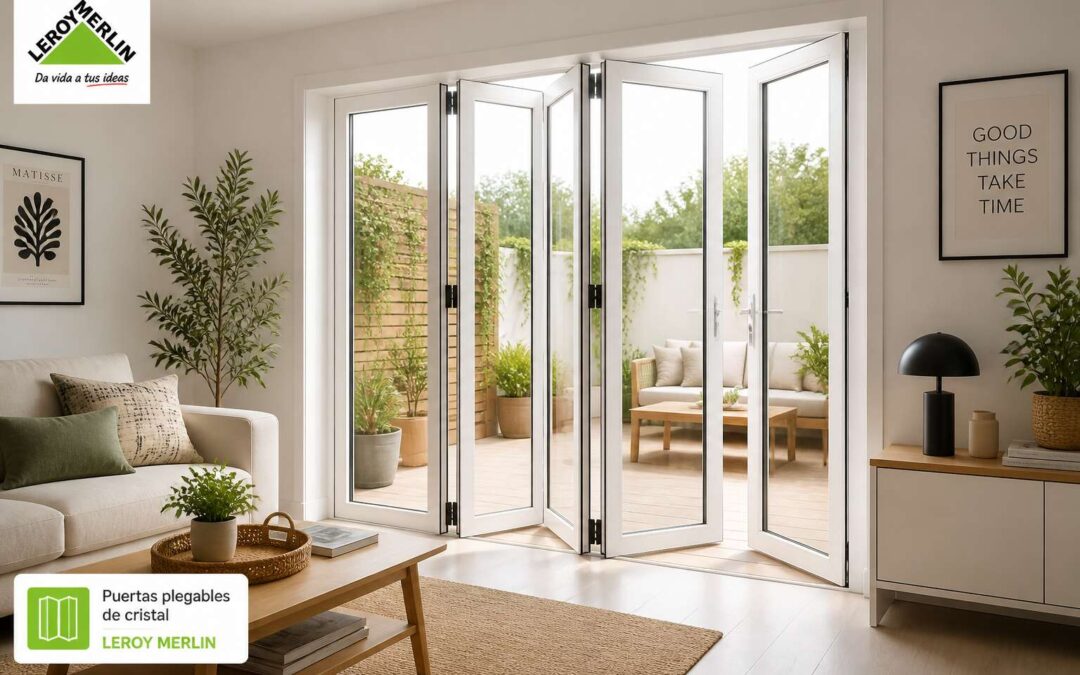
Exploring Folding Door Styles and Configurations
Interior Room Dividers vs. Exterior Patio Solutions
Choosing between interior room dividers and exterior patio solutions changes how a South African home interacts with light and airflow. Interior folding systems favour slim profiles and quiet glides, while exterior versions demand reinforced aluminium, hardened glass, and drainage channels for heavy rain.
Leroy Merlin folding doors cover both ends of that spectrum. Interior configurations often use two to four panels that tuck neatly against a wall. Exterior patio setups may stack six or more panels, creating a wide opening that connects a braai area to the garden.
- Interior: lighter tracks, single glazing, compact stack heights
- Exterior: reinforced hardware, thermal break profiles, flush thresholds
The pivot point and the direction of the fold determine whether furniture can sit close to the opening. A telescopic configuration suits narrow passages, while a corner unit works for wrap-around verandas. The panel height and locking mechanism differ noticeably between leroy merlin folding doors in each category. Clearance above the doorway matters, since top-hung systems require more headroom. The right choice balances daily convenience against the structural demands of the space.
Bi-Fold, Multi-Fold, and Accordion Mechanisms Explained
A folding door does one thing well: it gets out of the way. The bi-fold uses two panels hinged together that fold to one side. It suits smaller openings where a full wall of moving glass feels excessive. The multi-fold carries three or more panels that fold concertina-style along a track, turning an entire wall into an opening.
Leroy Merlin folding doors in accordion configurations use many narrow panels that zigzag into a compact stack. This works well for passageways where swing space is tight. Each mechanism changes how the panels distribute weight and how smoothly the track glides.
- Bi-fold: two panels, single hinge point
- Multi-fold: three or more panels, multiple track sections
- Accordion: narrow panels, zigzag stack
The choice affects daily use more than people expect. Panels in a standard fold stack against a wall, while some configurations let them slide past one another. The right leroy merlin folding doors configuration depends on the opening width and the floor space available.
Popular Materials: Aluminum, Wood, PVC, and Glass Combinations
Most folding doors fail from material fatigue, not mechanical wear. Steel reinforced aluminium has quietly become the standard for leroy merlin folding doors in exposed locations. It resists warping. Wood, by contrast, moves with humidity and needs regular oiling. PVC remains the budget friendly option, but flexes under wide glass panels.
The material dictates which glass combinations are feasible:
- Aluminium supports double glazing without extra support
- Wood frames limit panel sizes due to weight
- PVC suits narrow, single pane designs
- Frosted or tinted glass changes privacy and heat gain
I have seen specifiers pick a style first, then discover the material won’t handle the opening. Check the load chart before making a final selection!
Custom Sizes, Glazing Options, and Finish Choices
One metre of extra width completely alters the geometry of leroy merlin folding doors. A narrow opening demands a different stack pattern than a wide terrace. I have specified configurations where the panels pivot in alternating directions to manage wind load. This approach becomes essential in Cape Town’s coastal suburbs.
Glazing choices extend beyond clear glass:
- Low iron glass reveals true outdoor colour
- Acoustic laminated glass dulls highway noise
- Radiant low E coatings deflect heat without darkening the view
Finish choices matter equally! Powder coated aluminium holds colour under harsh UV. Wood veneers need protective lacquer. The panel count, astragal profile, track type, and stacking direction determine the final aesthetic.
Leroy Merlin’s Exclusive Lines and In-Store Brands
Stacking style changes how a facade reads. A narrow passage calls for an alternating fold pattern. A wide terrace suits a single stack to one side. In Cape Town’s coastal suburbs, wind load reshapes the choice. Leroy Merlin folding doors in the exclusive lines handle these configurations with dedicated hardware, not generic track systems.
The in-store brands carry their own design logic. Some focus on slim sightlines. Others prioritise thermal breaks. I have fitted both. The difference is stark! A centre split arrangement balances foot traffic, while a corner configuration turns two walls into one opening.
- Single stack: panels gather left or right
- Centre split: panels part from the middle
- Alternating fold: panels hinge in opposite directions
Leroy Merlin folding doors across the exclusive ranges use reinforced tracks and sealed pivots. The configuration determines the hardware. That is the real difference between display and installation.
Key Advantages of Installing Space-Saving Folding Doors
Maximizing Usable Floor Area in Compact Homes
Every square metre in a compact South African home needs a second purpose. A fixed wall cannot provide it. A folding door can. Fully opened, its panels stack flat against the frame, exposing the whole floor width. No swing radius is required, so a sofa or desk sits close to the opening. I installed one between my kitchen and laundry nook and gained a usable passage! That is the benefit of leroy merlin folding doors: they turn stored panels into liveable floor area. Consider these practical advantages:
- Eliminates the door swing zone, freeing space for furniture
- Folds flush to the wall, revealing the complete room width
- Allows quick switches between open plan and separate rooms
A narrow hallway can house a fold away pantry. The floor remains useful, not occupied by a swinging door.
Enhancing Natural Light Flow and Visual Continuity
Natural light travels further through a home when barriers are removed. Leroy merlin folding doors allow sunlight to move from one room to the next without interruption. When panels fold away, sightlines extend past the opening, making adjacent spaces feel like one continuous volume. I have watched this transform a dark Johannesburg townhouse into a space that feels twice its size.
The visual effect matters in South African homes where narrow passages and split-level layouts break up natural light. Folding doors preserve that connection. Glass panels can be specified with low-E coatings to manage heat gain while maintaining clarity. Solid panels offer privacy at the cost of light transmission.
Here is what changes when folding doors replace fixed walls:
- Brightness levels equalise across connected rooms
- Internal windows become unnecessary
- Rooms feel larger without structural changes
Improving Ventilation and Indoor-Outdoor Connectivity
A Highveld summer evening carries a specific invitation. The air cools, the birds settle, the braai smoke drifts. Leroy merlin folding doors make that transition effortless by opening entire walls to the garden. When the panels concertina back, the house and patio become one connected zone.
Airflow changes immediately! A narrow passage traps heat; a closed kitchen holds cooking smells. Folding doors create a pressure differential that pulls air through the home, swapping stale interior air for the garden breeze. I have seen Durban flats go from stifling interiors to properly cross-ventilated spaces within minutes.
The connection matters beyond air movement:
- Entertaining flows between kitchen and braai area without bottlenecks
- Children move freely between playroom and lawn
- Outdoor cooking smoke disperses instead of lingering inside
Acoustic Insulation and Thermal Efficiency Gains
A single poorly sealed door can waste up to 20 percent of a home’s heating or cooling energy. Installing leroy merlin folding doors changes that. Double glazing and thermally broken aluminium frames slow heat transfer, so a Highveld bedroom stays warm in July without the heater running all night.
Acoustic insulation works the same way. The sealed chambers and compression gaskets dampen outside noise. I have watched a house on a busy Pretoria road go from constant traffic rumble to a faint hum. These doors also save floor space because the panels stack neatly to one side. No swing radius needed. No wall space lost to a hinged door that opens inward. For townhouses with narrow passageways, this is the practical answer. You get temperature control, quiet, and usable square metres.
Aesthetic Versatility for Modern and Classic Interiors
Most doors demand attention with hinges and swing arcs. Leroy Merlin folding doors do the opposite. They disappear into a neat stack, leaving the room’s architecture visible.
The aesthetic payoff is real. A modern kitchen with matte black frames reads industrial and sharp. A Cape Dutch lounge with oak veneer panels reads warm and traditional. The same folding system works across both because the materials, glazing, and hardware are chosen to suit the interior, not the other way around.
Consider what this flexibility means:
- A home office can adopt a minimalist glass partition.
- A heritage hallway can use timber doors that echo the existing joinery.
- A coastal apartment can specify coastal-grade aluminium that resists salt air without clashing with the décor.
This is why leroy merlin folding doors appear in renovations, new builds, and boutique shops. They fit the style you already have, or the one you are planning.
Cost-Effectiveness Compared to Sliding or Hinged Alternatives
When you price a standard hinged door setup, you pay for every swing arc, every wall partition, and every piece of hardware. Leroy merlin folding doors cost less overall because they replace multiple door units with one compact system, reducing framing work and lowering installation time.
A sliding door in a narrow hallway needs cavity hardware, which requires extra wall thickness and specialist fitting. A folding door mounts directly to the opening. You save on studwork and on the tracks that sliding alternatives demand.
The cost advantage shows again when you count panels. A four panel folding unit often costs less than two separate hinged doors with comparable glazing. In practical terms:
- Fewer track components than sliding systems.
- Less structural preparation than hinged doors.
- Shared seals and gaskets across the unit.
Leroy merlin folding doors also keep delivery costs down, since packed sections are lighter and flatter than a full glass sliding door. The savings appear at purchase, during installation, and later during maintenance.
Selecting the Right Folding Door for Your Specific Space
Measuring Door Openings: Width, Height, and Clearance
A single millimetre of oversight can transform a perfect fit into a frustrating installation. When planning for leroy merlin folding doors, the first step is understanding your opening’s true dimensions. Walls are rarely straight, floors rarely level. Measure the width at three points: top, middle, and bottom. Record the smallest figure. For height, check both sides and the centre. Clearance matters too, for handles and track mechanisms.
- Width at three vertical positions
- Height at three horizontal positions
- Diagonal measurements to check squareness
Allow extra space for the folding stack against the adjacent wall. This recess often gets overlooked. A standard tape measure and a steady hand suffice, but double checking prevents costly errors.
Determining the Ideal Number of Panels and Folding Direction
Selecting the right folding door for your specific space requires thinking beyond the opening. The ideal number of panels depends on the width you need to span and how much wall space is available for the folded stack. A narrow doorway might suit two panels, while a wide patio opening often demands four or six for a manageable stack depth. Folding direction shapes daily use. A door that folds away from the walkway keeps traffic fluid, whereas one that closes toward a fixed corner preserves usable floor area around furniture. Consider these common configurations:
- Two panels: minimal folding depth, best for compact interiors
- Four panels: balanced movement, suits medium openings
- Six panels: reduced stack size, ideal for outdoor connections
The folding direction also influences sightlines. Splitting the panels from the centre opens a clear view, while a single-sided fold anchors the door neatly against an adjacent wall. Leroy merlin folding doors offer modular flexibility, so aligning panel count with your room’s layout becomes intuitive. Choose based on how you actually move through the space, not just how the door looks closed.
Glass Types: Clear, Frosted, Tinted, or Low-E Coatings
Glass often determines how a folding door feels before you touch the handle! With leroy merlin folding doors, I find the glazing choice shapes both light and privacy.
- Clear glass: pure openness, perfect for ocean views or garden sightlines.
- Frosted glass: filters daylight while blurring movement, ideal for bathrooms or street-facing walls.
- Tinted glass: cuts harsh sun and reduces UV fade for interiors.
- Low-E coatings: reflect heat while letting visibility through, a smart pick for South African summers.
Frosted options work well for home offices, while tinted panels suit high-traffic areas. Low-E glass balances thermal efficiency without sacrificing the visual continuity that folding doors create.
Budget Planning and Price Ranges at Major Home Improvement Retailers
Budget planning for leroy merlin folding doors begins with a clear price range. At major home improvement retailers, costs vary widely. A basic PVC unit sits below an aluminum version with Low-E glass. Custom sizing and finish choices push the total higher. Installation, track systems, and hardware add another layer. When I estimate, I compare per panel cost, not the full opening.
- Panel width and height
- Number of panels and folding direction
- Glass type and frame material
For leroy merlin folding doors, the spread between entry lines and premium collections is substantial. Set your budget before measuring. Then adjust as quotes come in.
Step-by-Step Installation and Fitting Guide
Preparing the Opening: Leveling, Framing, and Clearance Checks
The opening is where installations succeed or fail. Before fitting leroy merlin folding doors, level the threshold and jambs with a calibrated spirit level. A twist of five millimetres multiplies through every panel, binding the tracks and straining the hinges. Frame the rough opening square, shim where necessary, and brace the header to handle the concentrated weight of stacked panels.
Clearance checks require the same rigour. Folding mechanisms need breathing room for stacking and track movement, so maintain a consistent gap along the top and sides. Floor tolerances are the usual culprit. In my experience, South African screed often slopes subtly, so run a straightedge across the floor line and adjust the frame to match.
Assembling the Track System and Mounting Brackets Correctly
Assembly begins with the track, not the panels. A track misaligned by two millimetres will bind and drag. Mount the header track first, using the brackets supplied with your leroy merlin folding doors. Check the track for level along its entire run, not just at the ends. Shim behind the brackets where the wall dips. Fix the bottom track loosely after confirming the floor line.
Hang panels from the pivot end outward. For leroy merlin folding doors, engage each trolley and let the panel hang free before tightening anything. If a panel binds, adjust the bracket shims rather than forcing the hinge.
- Mount and level the header track.
- Position and loosely fix the bottom track.
- Hang panels from the pivot end.
- Adjust, then torque.
The brackets carry the load. Use the specified screws. The weight of stacked panels concentrates at the header. A loose bracket makes the entire system drag.
Hanging Panels and Adjusting Rollers for Smooth Operation
Once the track is true, the real work begins. Hanging the panels tests your patience and your eye. For leroy merlin folding doors, start with the pivot end panel. Lift it into the header track and seat the trolley. Let it hang free before you touch the bottom guide. A panel that stands square at this stage will likely run smooth for years.
Adjusting the rollers is a matter of small turns. The adjustment screw sits on top of each trolley. Turn it a quarter rotation at a time. Check the gap between panels as you go. The door should fold with a finger’s push, not a shoulder’s shove.
- Align the panel edges flush.
- Turn the roller screw clockwise to raise.
- Turn counterclockwise to lower.
- Test the fold after each adjustment.
Repeat for every panel. The last panel carries the latch, so it needs the most precise setting. A half millimetre here becomes a visible gap when folded. Work slowly and check each panel in both the open and closed positions.
Sealing Gaps, Aligning Locks, and Final Trim Details
After the panels hang true, attention shifts to the gaps. Sealing gaps on leroy merlin folding doors requires a careful eye. The bottom sweep should kiss the floor without dragging. Use a spirit level to check each panel’s edge. If you see light under the pivot panel, adjust the floor guide rather than forcing the hinge.
Aligning locks is next. The latch must meet the strike plate cleanly. I usually loosen the strike plate screws, close the door, and let the latch find its own home. Then tighten and test. A misaligned lock will wear fast and annoy you daily.
Final trim details complete the installation:
- Install cover caps over the track screws.
- Fit the top guide channel neatly.
- Secure any draft excluder to the jambs.
These small touches protect the mechanism and quiet the operation. A door that closes without resistance and locks with a soft click is the true measure of a precise installation.
Common Installation Mistakes and How to Avoid Them
Fitting leroy merlin folding doors takes patience. Before any permanent fixing, dry run the entire assembly on the floor. Slot every panel and roller into the track, then stand it up to check the fold. This ten minute rehearsal exposes most problems early.
Common mistakes show up here. People force panels that bind, assuming the hardware is faulty. In my experience, the fault usually sits in an uneven subfloor or a track screwed down under tension. Loosen, shim, and retighten.
- Mixing panel sequences from different boxes is a frequent error.
- Securing end brackets without supporting the track middle causes sag.
- Uneven roller tension makes panels drift during the fold.
When the track sits true, the panels glide. When it sits twisted, nothing repairs the damage short of restarting the fit for your leroy merlin folding doors.
Tools and Materials You Will Need for a Professional Finish
Installation is not a race. A single misaligned bracket on your leroy merlin folding doors turns a smooth fold into a grinding ritual. Start by unpacking and checking all hardware against the manual. Missing parts are easier to fix on the floor than halfway up a ladder.
- Spirit level with magnetic base
- Drill driver with hex and torx bits
- Timber shims for packing
- Rubber mallet, not a hammer
Set the head track into the opening and level it before fixing any screws. Work from one end, supporting the track centre to avoid bowing. Hand each panel onto its pivots, then adjust the bottom rollers so every panel lifts clear of the floor. Cycle the door twice and tweak the cams again. Perfection takes three attempts.
Maintenance, Repairs, and Long-Term Care
Daily Cleaning Routines for Frames, Glass, and Tracks
Cleaning a folding door system is a quiet ritual that rewards consistency. With leroy merlin folding doors, the daily routine preserves the mechanics that make them a pleasure to operate. Salt-laden coastal air in Durban or the fine dust of Johannesburg demands attention.
Frames need a simple wipe with a damp microfibre cloth. Glass responds well to a streak-free cleaner. The tracks, however, require the most patience. A soft brush dislodges the grit that accumulates overnight. Leroy merlin folding doors depend on this small effort to keep the rollers moving freely.
In my experience, a typical morning routine covers three things:
- Run a dry cloth along the bottom track.
- Check the rollers for visible debris.
- Wipe the sill and frame edges after any storm.
Each step takes seconds. The reward is smooth operation that lasts!
Lubricating Hinges, Rollers, and Locking Mechanisms
Once the tracks are clean, the next line of defence is lubrication. Leroy merlin folding doors rely on hinges, rollers, and locking mechanisms that grind quietly when neglected. A silicone based spray beats oil because it resists dust adhesion and does not degrade rubber seals.
Before applying anything, wipe each pivot point with a dry cloth. Then apply a thin film, open and close the door several times to distribute it. The roller bearings need a single drop of PTFE grease, not a flood. Locking mechanisms respond to graphite powder, which survives cold nights and coastal humidity.
- Inspect the hinge pins for rust or wear.
- Check the track for burrs that catch rollers.
- Test the lock alignment before lubricating.
With leroy merlin folding doors, repeating this every six months prevents the stiffness that forces owners to replace hardware prematurely. The system keeps its resistance, and the doors continue to glide without complaint.
Replacing Worn Seals, Gaskets, and Bottom Guides
A folding door’s quiet persistence depends on parts that never seem important until they fail. The seals and gaskets that line each panel are the true guardians against draughts, dust, and the insistent hum of traffic. When these perish, they crack and shrink, leaving gaps that compromise the thermal efficiency you paid for. I often see homeowners in coastal regions where salt air accelerates this decay. The bottom guide, that humble plastic or nylon shoe that steers the panel along the floor track, wears down faster than any other component. A worn guide makes the door shudder and scrape, and it eventually damages the track itself.
Replacement is straightforward. Lift the panel slightly, remove the old guide, and slide in the new one. For seals, gently pull the old gasket from its groove and press the new strip into place. No adhesive is necessary for most profiles, but check that the rubber sits flush along the entire edge.
– Inspect the bottom guides every six months for uneven wear.
– Look for hardened or brittle seal sections near corners.
– Tug gently on the gasket to test its grip within the frame.
– Verify that the guide screws are tight and not stripped.
New seals restore the door’s original resistance to water and wind. New guides return that effortless glide. For leroy merlin folding doors, these small replacements cost a fraction of new hardware and extend the system’s useful life by years.
Seasonal Adjustments for Weatherproofing and Security
The seasons in South Africa test a folding door in ways that become obvious only after the damage is done. Heat swells the aluminium profiles. Winter cold contracts them. The alignment you set in October is never the alignment you need in June. These shifts change how the locking pins sit and how the perimeter seal compresses against the frame. A door that closes perfectly in summer can develop a hairline gap by winter, and that gap is an invitation for wind, rain, and worse.
Seasonal adjustment takes minutes, but the consequences of skipping it linger. Track tension, hinge depth, and lock alignment all drift with the temperature. I have walked through homes where a single loose hinge bolt turned a solid security barrier into a panel that lifted clean off its pivot point. The fix is routine if you build it into the rhythm of your year.
– Adjust track tension before the first summer storm.
– Test every lock point with the door both open and closed.
– Run a hand along the perimeter seal to feel for uneven compression.
– Re-torque hinge bolts after any extended heatwave or cold snap.
The result is a system that stays weathertight when the weather turns hostile. Your leroy merlin folding doors will respond to the season instead of fighting it, and the lock cylinder will engage with the same decisive click every time.