
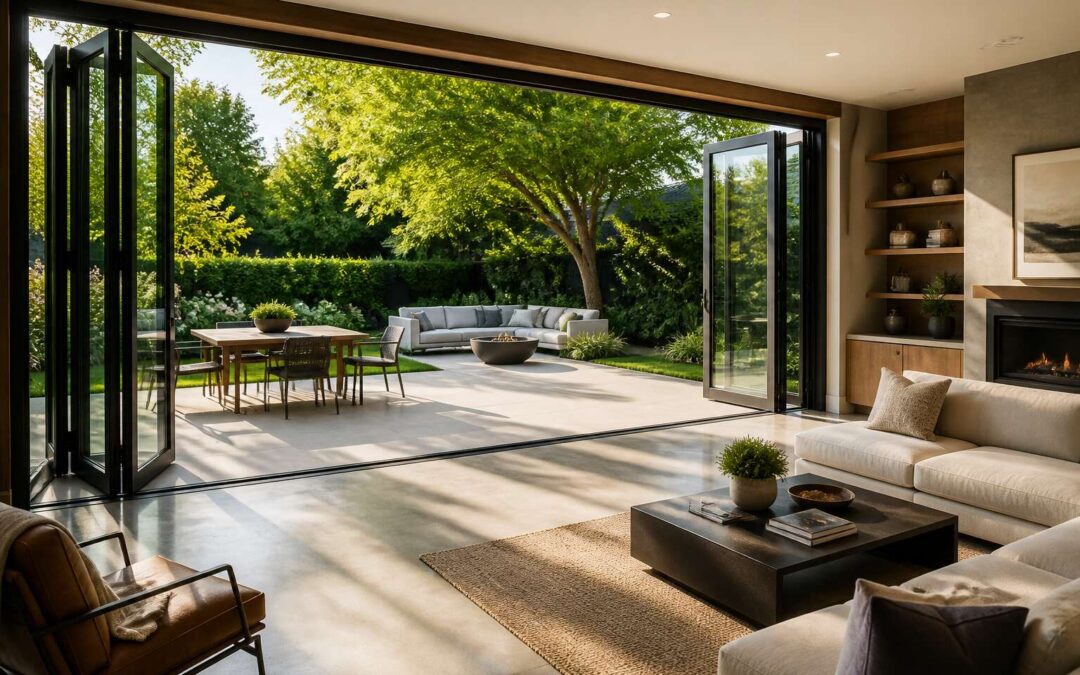
Exploring Benefits of Bespoke Folding Door Systems
Maximizing Space Efficiency in Open-Plan Living
Across South Africa’s expanding metro regions, homeowners are rediscovering the value of adaptable floor plans. The steady shift toward open-plan living has created demand for boundaries that can dissolve on command, which is precisely what a set of folding doors custom built for your space can deliver.
These systems reconfigure entire rooms without sacrificing natural light. When the panels concertina back, the threshold between indoors and patio vanishes completely. When closed, they offer acoustic separation without the visual weight of a solid wall. The benefits for spatial efficiency include:
- Seamless connections between kitchen, dining, and garden zones
- Minimal lost floor area compared to conventional swing doors
- Uninterrupted sightlines that make smaller interiors feel expansive
Choosing folding doors custom for your home also simplifies furniture placement. You gain the freedom to arrange seating without planning around door arcs, and the thermal performance of modern glazing keeps these spaces comfortable through Highveld summers and coastal winters alike.
Enhancing Natural Light and Scenic Views
Durban mornings arrive bright and direct through east-facing glass. A folding doors custom system turns that light into a felt presence, warm on the skin and shifting across the floorboards. In the Drakensberg foothills, the same panels frame ochre cliffs and grazing pastures at golden hour. Stellenbosch homeowners watch vine rows recede toward the mountains through a single uninterrupted sweep of glazing.
What emerges is a deeper relationship with the landscape. Consider the quiet details that make this possible:
- Slender aluminium frames that prioritise glass over structure
- Corner configurations that open two walls at once
- Panels that glide silently onto a hidden stack
These choices decide how much of the outside world enters daily life. Each panel folded away brings the view closer.
Architectural Flexibility for Modern Renovations
Every older South African home carries structural quirks. A Grahamstown cottage has doorways off square. A Pretoria family home might have a façade that cannot be altered. Folding doors custom engineering works with these constraints, because each panel is measured and fabricated for the exact opening it will serve.
Architectural flexibility emerges through careful detail. Panels follow curved tracks, adapt to sloped floors, or fold into asymmetrical spaces where standard sliding doors fail. This adaptability matters in renovation, when every millimetre counts.
Consider what folding doors custom permits:
- Multi-panel configurations open two walls at once
- Inner frame options match existing timber or steel
- Low threshold tracks integrate with heritage floor finishes
The custom approach lets architects design around structural realities rather than against them. In my experience, the final aperture, stack position, and sightline become part of the building’s original logic, not a compromise.
Improving Energy Performance and Insulation
Energy performance usually lags behind aesthetic appeal, but bespoke folding doors custom can turn glass walls into a thermal shield. The joinery does the work: double glazing with low-e coatings, thermally broken aluminium, and compression gaskets on every edge.
In a Johannesburg home, afternoon heat gains hike cooling costs. Custom systems with argon filled units cut that transfer. For coastal homes, the same folding doors custom design resists moisture and wind-driven rain.
- Panel thicknesses that match cavity insulation
- Threshold seals that block floor drafts
When closed, each fold forms a continuous barrier, often outperforming fixed windows. That stability protects a room from morning chill to highveld evening.
Selecting Materials and Finishes for Your Custom Folding Doors
Aluminum Profiles for Sleek and Durable Frames
The most common failure point in a folding door system is the frame material. South African coastal air and high altitude UV intensity separate quality profiles from cheap alternatives. Aluminum remains the preferred choice, delivering a strength to weight ratio that steel cannot match without excessive bulk.
The finish matters just as much. Frankly, this is where I see homeowners make costly mistakes. Anodising thickens the natural oxide layer for corrosion resistance; powder coating provides a protective polymer shell. Both treatments extend the lifespan of your folding doors custom. In Johannesburg’s dry climate, a textured powder coat hides dust beautifully, while Cape Town’s salt spray requires heavier anodised layers.
Key variables during specification:
- Extrusion wall thickness, which governs wind load flex
- Surface treatment relative to your specific microclimate
- Thermal break integration for stable interior surface temperatures
The profile you choose for your folding doors custom becomes the permanent boundary between your interior and the elements.
Timber Options for Warmth and Classic Appeal
Old yellowwood carries the memory of winter rain. For folding doors custom, timber is a covenant with time. Cape chestnut and saligna weather their own narratives; their grain deepens under Highveld light. A meranti frame moves with the humidity of coastal mornings.
The finish becomes ritual. Danish oil enters the grain; hard wax builds a barrier without suffocating the surface. In Johannesburg, a matte lacquer resists dust; in Durban, a marine varnish endures salt. Patina is not decay, it is testimony.
The door itself is the threshold. Choose the timber that remembers where you live.
UPVC Solutions for Cost-Effective Customization
UPVC answers the question timber and aluminum cannot: how far can a budget stretch when installing folding doors custom? This polymer composite resists warping through Highveld summers and coastal haze, retaining dimensional stability where other materials fail. The profile extrudes to near-net shape, so hardware channels and gasket grooves arrive precise. That precision reduces installation time and labor cost.
- Multi-chamber frames that cut weight without losing rigidity
- Wood-grain foils that mimic meranti without annual oiling
- Baked-on laminates that resist ultraviolet fading
For a project on a measured budget, UPVC offers this durability as a baseline. You select the finish, glazing, and track system, and the profile holds its shape for decades against salt, rain, and sun. The price point holds while the structure endures.
Glass Choices: From Clear to Tinted and Double-Glazed
Glass occupies roughly eighty percent of a folding doors custom installation, yet many homeowners choose it last. Clear glass delivers uncompromised views, but on the Highveld it turns interiors into greenhouses by mid-afternoon.
Tinted glass absorbs solar radiation before it reaches your furniture and flooring. Grey tints reduce glare without distorting colour; bronze adds warmth to the light. Coastal properties benefit from laminated tinted glass, which holds together on impact.
Double-glazed units alter the performance profile. Two panes with an argon fill cut heat transfer and dampen traffic noise. Orientation and climate should guide the decision:
- North-facing rooms need low-emissivity coatings that reflect heat
- West-facing panels require tinting to manage late afternoon sun
- Coastal homes demand toughened glass against wind-borne debris
I have seen each choice change how a folding doors custom system feels from both sides of the threshold.
Hardware and Hinges: Ensuring Smooth Operation
Hardware often receives less attention than it deserves. The hinges and tracks determine whether a folding doors custom installation glides effortlessly or fights you every time. In South Africa, coastal humidity and Highveld dust demand specific finishes. Stainless steel hinges resist corrosion, while anodised aluminium tracks handle high-traffic use without wearing down. I have seen cheap hardware ruin an otherwise superb door system within two years.
Finishes affect more than appearance. Powder-coated hardware in matte black or bronze hides fingerprints and suits farmhouse styles. For contemporary homes, brushed nickel or satin chrome offers a quieter tone. Each choice modifies the tactile experience of the handle and lock.
- Choose self-lubricating rollers for smoother movement.
- Verify the hinge weight rating against your door size.
- Opt for adjustable pivots to fine-tune alignment.
A well-specified hinge system makes a folding doors custom feel almost weightless. That quiet precision transforms daily use, from the morning coffee open to the evening breeze.
Planning Your Custom Folding Door Installation
Measuring and Design Consultation Essentials
Before a single hinge is fitted, the real work begins in a quiet room with a tape measure and a ledger. In South Africa, where coastal humidity and Highveld sunlight test every frame, precise measurement becomes a ritual. I have seen installations fail not because of poor materials, but because the threshold was measured on a Tuesday morning when the timber had swelled by five millimetres.
The design consultation determines the precise geometry. Bring your floor plans, but also bring your daily rhythm. How the wind moves across your stoep, where the morning light pools, and which door leaf will bear the brunt of a busy household. These details shape the engineering.
During consultation, we assess:
- The structural header load above the opening
- Floor tolerances and threshold drainage angles
- Glazing weight versus track capacity
Every dimension becomes a conversation. Folding doors custom fitted to your home require this forensic attention. We also record the direction of prevailing weather, so the final product opens like a whisper.
Navigating Building Regulations and Permits
In South Africa, folding doors custom installations demand as much paperwork as construction work. Municipal approval processes vary by province, and the difference between a smooth build and a stalled one often comes down to how early you engage with the local authority. I have watched projects stall for weeks because the homeowner assumed permits were the builder’s problem.
The structural implications of removing a wall section trigger scrutiny. Your engineer must sign off on the load path, and the municipality will want to see those calculations before granting permission.
Consider these steps when planning:
- Submit your building plan to the local municipality
- Obtain engineer’s certification for structural changes
- Apply for the necessary permits before ordering materials
- Factor in approval timelines that can stretch to several weeks
Folding doors custom designed for your home deserve this diligence. The permit process protects you from liability, and the wait is shorter than the regret of a non-compliant installation.
Choosing the Right Installer for Your Project
Choosing the installer for your folding doors custom installation is as consequential as the design itself. In South Africa, the difference between a flawless installation and a costly failure rests on who holds the drill. I have seen aluminium suites ruined by installers who treated shimming as an afterthought.
A qualified installer will inspect the opening, verify the structural header, and discuss the weight distribution of the panels. They will also confirm that the tracks are level to the millimetre, because a minor slope accelerates wear on the rollers.
- Ask for local references from completed folding doors custom projects
- Verify that the installer uses the manufacturer’s certified installation methods
- Confirm that the team is insured and carries the necessary liability cover
The most expensive system will perform poorly in the hands of an inexperienced crew. The longevity of your installation depends on the skill of the installer.
Care, Maintenance, and Longevity of Custom Folding Doors
Cleaning and Lubrication Routines
Most homeowners forget the tracks until the fold sticks. Your folding doors custom deserve a deliberate cleaning rhythm. Dust and grit accumulate silently, turning fluid motion into a jarring halt.
- Brush away loose debris with a soft, dry brush.
- Wipe surfaces with a lightly dampened microfiber cloth.
- Dry completely before closing.
Then lubricate the hardware. Use a silicone-based spray on hinges and rollers every few months. Oil-based products attract dust and harden, causing more harm than good. In coastal South Africa, salt air accelerates corrosion, so clean more frequently. Longevity depends not on the material, but on this regular routine.
Adjusting Tracks and Rollers for Optimal Performance
Most people ignore track alignment until the drag becomes audible. Over months of daily use, the adjustment on your folding doors custom shifts imperceptibly. A small turn of the roller screws often restores the satisfying glide.
Here is what I assess when checking track performance:
1. Listen for a rhythmic clicking, signalling a roller catching a track seam.
2. Feel the weight distribution. If one panel leads the others, the rollers carry uneven loads.
3. Examine the bottom track for flat spots or compressed debris.
Every folding door system includes an adjustment screw on each roller. A half turn clockwise or counterclockwise raises or lowers the panel by millimetres. That is enough to realign the door within its threshold. In South African homes, seasonal temperature swings affect aluminium and timber differently. Bi-annual track adjustment keeps the hardware in equilibrium, preventing premature wear on your folding doors custom.
Weather Seals and Insulation Checks
Nobody notices a weather seal until the wind finds its way through. In Cape Town, that happens more often than homeowners admit. The rubber gaskets along your folding doors custom take a beating from sun and salt air.
Run your hand along the perimeter on a windy day. Feel for draughts around the meeting stiles and the bottom sweep. A simple visual inspection every six months catches cracks early.
- Check corner joints for splitting
- Look for uneven compression along the threshold
- Close a piece of paper in the door. If it slides out easily, the seal is weak
Replacing a worn seal on your folding doors custom is a small job. Ignoring it leads to heat loss and dust ingress. The insulation value depends on that quiet strip of rubber doing its job.
Common Issues and Troubleshooting Tips
Regular care determines how many years your folding doors custom will serve you. In coastal towns like Cape Town, salt-laden air accelerates wear on moving parts faster than inland homeowners expect. I have seen ten-year-old doors outlast five-year-old ones, all because owners cleaned the tracks monthly!
Common issues follow predictable patterns. A door that sticks halfway usually has a bent bottom roller. A gap at the meeting stile points to loose hinge plates on the trolley system. These symptoms respond to early intervention. Neglect them and the damage reaches the frame.
- Debris build-up in the track grooves causes grinding during operation
- Rust on the pivot brackets restricts the folding motion
- Worn rubber bumpers let panels knock against each other
Each problem reveals itself through sound and resistance. A rhythmic click means a roller has flattened on one side. A scraping noise at the bottom edge signals the door has dropped off its track. Understanding these signs helps you troubleshoot swiftly and extends the lifespan of your folding doors custom considerably.
Understanding Warranty and Aftercare Support
Warranty terms for folding doors custom differ sharply between suppliers. A five year guarantee means nothing if the fine print excludes salt corrosion or coastal exposure. I always advise clients to photograph their installation and store the documentation with their title deeds. One client in Durbanville claimed a bent track under warranty. The manufacturer rejected it because the wrong lubricant had been used. That mistake cost R4,000 to repair!
Aftercare support matters as much as the initial product. A reputable installer will return for a six month checkup. During that visit they should:
– Re-torque the hinge plates
– Assess the bottom rollers
– Verify the track alignment
Builders in Gauteng often offer this service. Western Cape installers rarely do. That distinction matters.
The average lifespan of a folding doors custom unit is 15 years with proper maintenance. Without it, expect eight. The difference is your habits and their support.
Upgrading Existing Doors with Custom Features
Here is a statistic that stings: the average South African homeowner will ignore their folding doors custom unit for eleven months out of every year. The twelfth month is when a roller jams halfway through a braai. Longevity is not purchased. It is practiced.
Care for a folding doors custom system is unglamorous. It is checking the bottom rollers before they screech. It is wiping the tracks after a dusty Cape wind. These small acts separate a 15 year door from an 8 year liability.
- Test each panel’s movement monthly
- Inspect the weather seals before winter
- Confirm the drainage holes stay clear
When the structure is sound but the aesthetic feels tired, upgrade rather than replace. Custom features like integrated blinds, fingerprint resistant finishes, or acoustic glazing can modernise an existing track system. This approach extends the life of the frame while refreshing the look. The result is a folding doors custom setup that performs like new, without the cost of a full installation.