
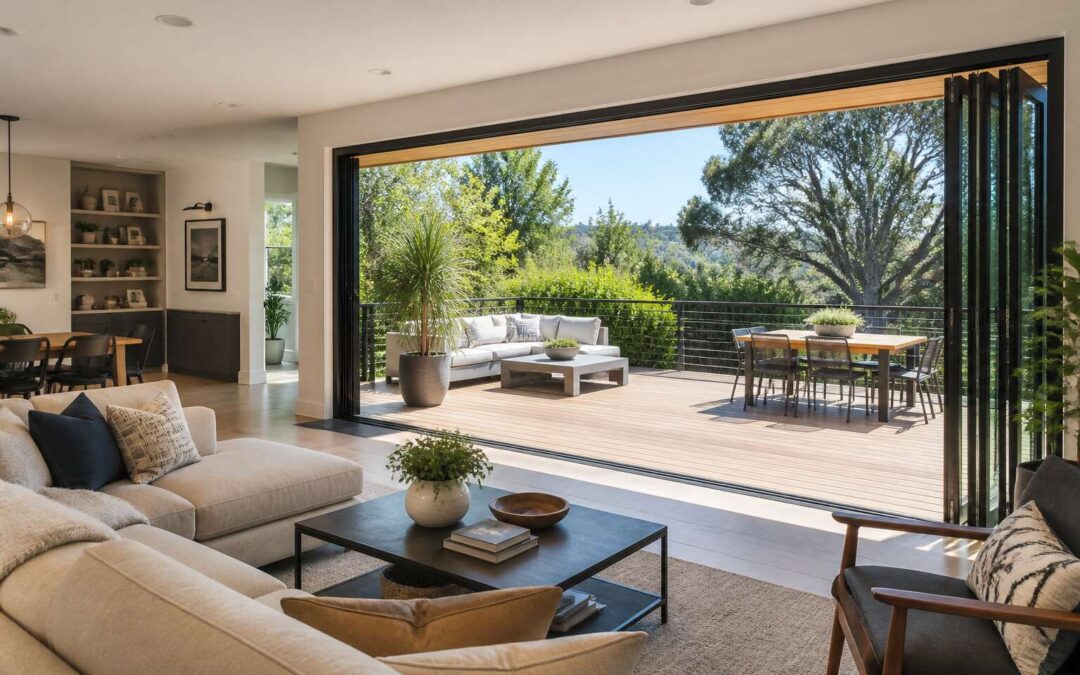
Selecting the Right Folding Door Configuration
Interior Dividers and Seamless Space Planning
Choosing the right configuration for interior folding doors to buy requires a clear view of your daily movements. A door that swings inwards might waste precious floor space, which is a costly mistake in compact South African homes. You are not just picking a product; you are defining the flow between rooms.
Instead of thinking about a static wall, view the partition as a planning tool. For open-plan layouts with a private study or a formal dining area, a single-panel door is often sufficient. Larger spans, like a lounge opening onto a passage, benefit from a multi-panel system that stacks neatly to one side.
Consider the specific interior function when you explore folding doors to buy:
– A two-panel unit for a small pantry or bathroom entrance.
– A four-panel system to divide a main bedroom from an en suite.
– Six or more panels for a wide opening between living spaces.
The panel count changes the fold radius, so measure the available wall space for the stacked panels. A common oversight is ignoring the structural header above the opening. Heavy timber or solid dividers need a solid lintel for support, while aluminium and glass alternatives are lighter and require less reinforcement.
For seamless space planning, think about sightlines. If you want to connect the kitchen and dining room without risking cooking smells, choose a configuration with a full seal on the top and bottom tracks. In smaller homes, a bi-fold that opens from the centre creates a wide, welcoming entrance that feels grand without eating into square meterage. Ultimately, the right configuration is the one that disappears when open and provides true privacy when closed.
Outdoor Patio and Balcony Configurations
Cape coast property owners contend with wind loads that would distort a flimsy track system. This is where indoor hardware fails and folding doors to buy take on a more technical meaning.
For balcony and patio apertures, exposure dictates configuration. A three-track system lets each panel slide into its own recessed pocket, keeping the opening free of stacked leaves. Consider these factors when planning:
- Prevailing wind direction across the opening
- Ceiling height available for top-hung tracks
- Tolerance for a bottom track threshold in the walkway
Coastal humidity accelerates corrosion on standard rollers. When you compare folding doors to buy for outdoor use, hinge and roller quality matters more than panel count, as I have learned through years of coastal failures. A four-panel bi-fold suits a narrow balcony, while a six-panel stack works for a full-width patio. Each configuration alters the sightline, so the fold direction should complement garden orientation.
Storage, Wardrobe, and Appliance Closets
Most people measure a closet by its width, but the true constraint is depth. Storage spaces reward a different approach when you choose folding doors to buy for a wardrobe or appliance alcove. The panels need to clear drawers, baskets, and machine lids without colliding.
A single-panel fold suits a narrow broom cupboard. A two-track system works for a reach-in wardrobe. For a utility room, three panels sliding on a bottom guide let you access the full interior.
Keep these in mind:
– Check the swing arc against adjacent shelving
– Confirm the track handles frequent partial openings
– Measure the recessed pocket depth before ordering
Hinge placement becomes the deciding factor. Every time a panel folds, the pivot point bears the load. With folding doors to buy for storage, choose hardware rated for daily cycles, not occasional use.
Commercial Entry and Multi-Unit Layouts
Commercial entrances pose a different puzzle. Foot traffic is constant, and the hardware must tolerate thousands of cycles each year. When you evaluate folding doors to buy for a shopfront or multi-unit complex, the stacking ratio becomes central. A four panel configuration folds neatly to one corner, clearing the threshold for deliveries and queues. A two track system suits wider openings where weight distribution must stay even. For folding doors to buy, the decision rarely ends with the product brochure.
Multi-unit layouts force difficult decisions. Sound attenuation and fire ratings often override aesthetics. Each panel’s gasket compression determines the acoustic performance, while the track profile governs daily usability.
- Header load capacity for high ceilings
- Cycle testing documentation
- Warranty terms for shared common areas
The configuration must follow the building’s rhythm. That rhythm changes with peak hours, seasonal weather, and the way residents move through shared spaces. Every choice carries consequences for maintenance teams and daily users alike.
Material Choices and Finish Durability
Hardwood, Veneers, and Natural Textures
Solid hardwood offers unequalled character, but it also demands respect for the local climate. In South Africa, the sun is relentless and humidity can be a sneaky adversary. A solid timber folding door will warp or crack if you ignore this. It is a living material, and it will speak its mind.
Veneers are the savvy alternative for many homeowners. They give you the look of that expensive hardwood without the full price tag or the maintenance guilt. A quality veneer over a stable engineered core provides remarkable consistency. It moves less than solid wood. This makes veneers a pragmatic choice for folding doors to buy when you want reliability over rustic temperament.
The texture of the surface is part of the sensory deal. Open-grain woods like Oak add tactile depth that a smooth laminate simply cannot match. But be careful, veneers with textured finishes require careful cleaning to avoid grime build-up in the grain. A matte finish will hide scratches better than a high-gloss one. That high gloss shows every fingerprint and tiny scuff mark from daily use.
Here is the breakdown of what you are actually choosing between:
– Solid Hardwood: Durable and authentic, but heavy and prone to movement with temperature swings.
– Engineered Veneer: Dimensional stability for larger panels, with a real wood surface for colour and grain.
– Thermofoil or Laminate: Budget friendly, but often feels hollow and can peel in coastal regions.
The protective finish is your real shield against the elements. A good UV-resistant lacquer is non-negotiable. It prevents the wood from fading into a ghost of its former self. Pay close attention to the edges and joints. Water seeps in through the corners before it ever attacks the flat surface.
For frosted glass or many modern slats, acrylic or aluminium is used to bypass wood’s troubles entirely. Many people opt for a mix of materials. A laminated core with a wood-textured foil on the exterior can look great and survive a coastal breeze. When you finalise your decision on folding doors to buy, remember that the material choice defines the lifespan of the installation.
PVC, Vinyl, and Composite Extrusions
PVC and vinyl extrusions have become the workhorses for folding doors to buy in regions where moisture and salt air wreak havoc. These materials do not swell, rot, or split, giving you a consistent finish that withstands the South African sun without fading. Composite extrusions add internal reinforcement, making panels stronger while keeping thermal performance steady.
- UV stabilised polymers that resist yellowing
- Sealed gaskets at every joint to block wind driven rain
- Powder coated aluminium tracks for longevity
The surface finish is part of the manufacturing process, not painted on. That means scratches do not expose raw substrate. Choose a matte or textured surface to hide marks better than slick gloss. These options offer a pragmatic path for coastal homes.
Aluminum Framing and Architectural Metals
Aluminium framing combines slim sightlines with structural muscle. A thermally broken profile blocks heat transfer while supporting panels that would make PVC buckle. For folding doors to buy in coastal towns, this matters. The metal refuses to warp under the African sun and stays stable when humidity spikes.
Architectural metals add further resilience. Powder coated aluminium resists chipping. Anodised finishes deliver a natural metallic depth that paint cannot replicate. Marine grade stainless steel shrugs off salt spray. Brass handles offer a classic accent but demand regular polishing.
- A deeper anodised layer means better resistance to coastal corrosion.
- Powder coated frames offer the widest range of colour choices.
- Marine grade stainless steel on hinges and tracks prevents rust streaks.
These details decide if folding doors to buy become a lasting asset or a burden. A well specified aluminium system outlives paint and presents a crisp profile that never looks bolted on.
Glass and Lasting Safety Glazing
The glass is where folding doors earn their keep. A 10mm toughened pane withstands the knock of a dropped braai tool or a windblown branch. Laminated glass goes further, holding together when cracked, so a storm-borne projectile cannot turn your threshold into a hazard.
Safety glazing standards in South Africa demand toughened or laminated glass in door assemblies. This is not bureaucracy. It is physics. Toughened glass crumbles into blunt granules. Laminated glass stays in its frame, a translucent shield until you replace it.
Finish durability follows the same logic. Low-E coatings reflect solar heat, reducing the load on your air conditioner while protecting furnishings from ultraviolet fading. When you inspect folding doors to buy, look for:
- Warm edge spacer bars to reduce condensation
- Argon gas filling for insulation
- Sealed unit edges that prevent moisture ingress
These details separate a competent door from a compromised one. The right folding doors to buy will serve for decades without fogging or failing.
Hybrid Systems with Integrated Insulation
A folding door’s true test comes in a Durban thunderstorm or a Karoo heatwave. Hybrid systems, with integrated insulation, answer that test by pairing rigid metal frames with low-conductivity cores. These folding doors to buy hold their finish while the temperature outside swings wildly.
Manufacturers inject polyurethane foam into hollow chambers or insert polyamide thermal breaks. This stops cold bridging and keeps condensation off your sills.
- Foam-filled profiles for thermal mass
- Thermal break strips for heat separation
- Weatherproof powder coatings for coastal salt
Integrated insulation transforms the door into a quiet barrier. The finish stays uniform, without peeling or warping, even after years of direct sun and rain.
Hardware, Tracks, and Everyday Operation
Hinges, Pivots, and Panel Interaction
A folding door is only as reliable as its hinges. For anyone comparing folding doors to buy, the track system often gets overlooked. Yet top hung tracks and floor mounted guides determine how effortlessly panels move. Pivot points carry the door’s weight, while alignment issues cause sticking over time.
- Rollers need clean, debris free channels.
- Hinges require consistent tension.
- Pivots must align with the floor track.
In everyday operation, small adjustments make a big difference. A creaking panel indicates a dry bearing, not a broken door. South African conditions, from coastal salt to Highveld dust, accelerate wear. Hardware quality separates average doors from those that endure.
Ceiling–Floor Tracks and Built-In Guides
For anyone comparing folding doors to buy, the ceiling floor track pairing determines daily behaviour. A top hung track supports the panel weight, while the floor mounted guide stops lateral drift. Coastal salt corrodes unprotected rollers, and Highveld dust packs into channels.
Built in guides keep panels aligned through hundreds of cycles. Rollers with sealed bearings handle temperature swings better than open units. A creaking panel usually means a dry bearing, not a structural fault.
- Wipe the track groove with a dry cloth
- Inspect the floor guide for accumulated grit
- Confirm the track bracket bolts stay tight
These checks take minutes and prevent expensive repairs. Ceiling floor tracks require both surfaces mounted square, otherwise friction rises and panels stick.
Handles, Locks, and Child-Friendly Latches
I once watched a toddler defeat a child lock by pulling harder. That memory drives every handle I recommend. When you compare folding doors to buy, the hardware is the deciding factor. A handle with a spring return stays out of the way, and a lock with a thumb turn works for an arthritic hand and a hurried parent alike. Child friendly latches require two distinct motions, not raw strength. That stops the preschool crowd while leaving you a clear path. In South African homes, where security gates and fresh air share the same wall, a keyed lock on the patio side offers peace of mind without complicating daily use.
Inspect the strike plate alignment once a season. A misaligned latch causes that irritating rattle. For households with small children, the practical checklist is short:
- Install latches at chest height for adults, not toddler height.
- Choose a lock with a visible indicator so you know it is engaged.
- Add a rubber bumper to prevent slamming fingers.
Proper hardware selection makes the difference between a door that works and one that does not.
Compression and Weather Seals
You hear the door settle before you see it. That soft, pressurized hush is the compression seal doing its quiet work. When comparing folding doors to buy, the rubber gaskets along the meeting stiles matter as much as the glass. They keep the Highveld dust out and the winter chill at bay. A proper seal compresses evenly along the full height. If you see light through the gap, the door will leak air, noise, and eventually water during a summer thunderstorm.
The track quality shows in daily use. A well machined aluminium rail lets the panels glide without a shudder. The wheels should ride on sealed bearings, not bare metal. You can hear the difference immediately. A smooth roll means the track is level and the hardware is matched. The bottom guide should be adjustable, so you can fine tune it after the house settles. That small adjustment prevents the panels from sagging and scraping.
Check the threshold seal before you sign anything. Many systems offer a drop seal that lowers automatically when the door closes, creating a tight line against the floor. It blocks draughts and keeps out the tiny insects that find every gap in a coastal home. For Cape winters, this makes the room usable even when the wind howls.
Consider the operational sequence:
One panel acts as the everyday door, leaving the rest stacked.
The compression handles pull the doors tight for a full seal.
The weather strip along the tracks needs replacing every few years, not decades.
That final point often gets overlooked. Rubber degrades in the African sun. A UV resistant compound lasts longer, but nothing lasts forever. Budget for that maintenance. A folding door that seals poorly is just an expensive curtain. The good news is that a well maintained system keeps its weather performance for a decade or more.
Hidden Hardware vs. Exposed Rails
“Seventy percent of the time you spend with a folding door is spent operating it.” That statistic, pulled from a manufacturer’s internal testing, underscores a simple truth: the visible glass and frame are the art, but the hardware is the sinew. Scrutinizing folding doors to buy means looking past the aesthetics to the daily physical interaction. A weak handle or a grinding wheel will erode your patience faster than any faded finish ever will.
The decision between hidden hardware and exposed rails is not merely aesthetic; it is a philosophical one. Exposed rails announce their presence, a visible skeleton of steel and aluminum that feels honest and industrial. They are easier to inspect for wear and simpler to service. Hidden hardware, conversely, offers a pristine sightline, a wall of seamless glass that draws the eye outward without interruption. That visual purity comes at the cost of accessibility. The mechanism is trapped in a cavity, working in the dark, and every adjustment requires disassembly.
The track is where the character of the system reveals itself. A thin, flimsy rail will flex under the weight of a panel, causing the wheel to bind at the same spot every time. You will compensate, subconsciously lifting the panel slightly as you slide it, a tiny surrender to poor engineering. A proper system uses a heavy-gauge aluminum track, machined to tolerances that feel surgical. The panels glide with a weighted silence. There is no shudder, no hesitation. The motion is so fluid it feels almost hydraulic, a testament to the bearing quality and the rail’s rigidity.
You learn to listen to the door’s language. A sharp metallic click at the end of the sweep is a warning. It often means the bottom guide is off-kilter, forcing the panel to scrape against the floor. That scraping is the sound of the system eating itself. The best guides are dynamic. They offer a micro-adjustment that lets you correct for seasonal shifts in your home’s foundation, a small screw you can turn to lift the panel back into perfect alignment.
When you finally narrow down your options, remember the friction points. The handle is your primary interface with the machine. It should have a solid, weighty feel. The locking mechanism should engage with a crisp, definitive thunk. A mushy lock is a latent failure.
The essential checks are always the same:
– Feel the weight of the pull handle. Lightness suggests thin metal that will bend.
– Listen for a double-click when locking. This indicates a two-point latch engaging top and bottom.
– Check the bearing type. Sealed bearings are non-negotiable. Nylon wheels on steel tracks can develop flat spots over time.
– Ask about the guide roller material. Nylon is quiet but wears. Brass is durable but can be loud.
The rhythm of the operation matters. A single panel should function as a daily pedestrian door, swinging free from the stack without a fight. The remaining panels should then concertina away with a consistent, even pull. If you feel resistance at the halfway point, the track is bowed. If you hear a rattle when the wind picks up, the carriage is too loose in the rail. These are the details that define ownership. The hardware is the difference between a door that moves with intention and one that merely slides. Choose the motion you want to live with, because you will repeat it thousands of times. The right track makes that repetition invisible. The wrong one makes it a chore.
Smart Access and Retraction Interfaces
Nothing kills the joy of a folding door faster than a clunky mechanism. Smart access changed that. Modern systems integrate with home automation, and a proximity sensor can open the door as you approach. Biometric locks handle security. You can forget keys entirely!
Retraction interfaces have evolved too. Some systems feature a push-and-glide assist. They sense your intent and take over the effort. The panels stack away quietly without any muscle work. A motorized carriage handles it.
Here are some features to compare when shopping for folding doors to buy:
- Sensor range and response time
- Smart lock compatibility
- Manual override quality
- Power failure behavior
Good automation never traps you. The best systems blend convenience with reliability.
Measurements, Space Planning, and Building Codes
Accurate Opening Dimensions and Plumb Checks
Before you commit to folding doors to buy, measure the opening at three heights:
- Top
- Middle
- Bottom
A single deviation of more than five millimeters will affect the track alignment. Plumb checks matter just as much. Use a spirit level on the jambs and head. If the frame leans, the panels will bind.
For space planning, consider the stack depth. Doors need a clear area to fold away. In South African homes, this often means adjusting for tiled floors and uneven ceilings.
Check the building codes for your municipality. Some require a minimum clear width for emergency exits. Others specify wind load ratings for coastal regions.
Measure the opening twice before you order. That habit saves time and money.
Stacking Depth and Area Setback
Stacking depth determines how far the folded panels project into the room. This area setback is not a luxury; it is a fixed spatial requirement. Measure the panel stack and add a clearance zone for hardware. A common mistake is to plan the doorway but forget the folded mass resting against the wall. The clear floor zone must remain unobstructed, or the panels will bind on rugs, skirting, or uneven tiling.
Local building codes in South Africa often demand a minimum clear width for egress. Coastal municipalities may impose wind load limits, which affects track size and anchoring. Check the regulations before you choose folding doors to buy, since compliance shapes both the opening and the setback area. Door schedules on approved plans rarely show the stacked footprint, so flag it early.
- Clear floor zone for the stack
- Headroom for the top track
- Wall space for the anchored end panel
Get the setback wrong and the doors will dictate your furniture layout instead of the other way around. That is why stacking depth belongs in the initial measure, not the final installation.
Clear Floor, Ceiling Heights, and Access Routes
The average South African ceiling sits at 2.4 metres, but folding doors to buy often demand more headroom than homeowners expect. The top track needs a solid mounting point, typically a concrete lintel or reinforced timber header. Plasterboard alone will not carry stacked panel weight.
Clear floor space extends beyond the opening itself. Furniture, rugs, and floor vents in the swing path will interfere with panel motion. Access routes matter for delivery as well:
- Measure hallways and stairwells for crated panels
- Check doorways leading to the installation site
- Verify service corridors have adequate turning radius
Building codes weigh heavily here. Local municipalities impose minimum clear widths for emergency egress. Coastal regions enforce wind load standards that determine track size and anchoring. Confirm these regulations early, as they shape your structural allowance for folding doors to buy.
Fire Egress and Energy-Code Compliance
Fire egress rules in South Africa are exacting. Folding doors to buy must not compromise escape paths. A panel stack that intrudes into a corridor reduces effective exit width. Measure the clear opening with panels fully retracted.
Energy-code compliance adds another layer. SANS 10400-XA governs thermal performance in residential units. Folding door systems need glazing with appropriate U-values and shading coefficients. Coastal provinces enforce stricter requirements for heat gain.
The process demands coordination:
1. Confirm the egress width with doors in open and closed positions.
2. Calculate the thermal transmittance of the entire assembly, not just the glass.
3. Submit early to the local authority for plan approval.
Installation Effort: Retrofit vs. Project Framing
Replacing Existing Wooden Hinged Units
Retrofitting a wooden hinged unit into a folding door system sounds simple. The reality is different. Existing frames carry subtle twists, shims, and settling damage that throw off alignment. A retrofit demands a perfectly square opening, or you will spend hours adjusting pivot brackets and floor guides. Project framing gives you control from the start. New timber or steel sub-framing is built to exact tolerances, which accelerates installation and reduces the risk of binding panels.
Consider the condition of your current framework:
– Check for water damage at the threshold
– Verify the head jamb is level, not just visually
– Measure the diagonals for squareness
If the opening is compromised, a retrofit will cost more in labor than a full reframe. Most manufacturers recommend project framing for older homes. When you compare folding doors to buy, the installation method determines final performance. Choose based on your structure’s condition, not the sticker price. That distinction saves real money down the line!
Full Rough-Install and Corner Bead Details
When you compare folding doors to buy, the installation effort often separates the smooth experience from the nightmare. Project framing is the less glamorous sibling of full rough-install work, but it saves you from the slow agony of adjusting shims in a warped old cavity. A complete reframe gives your contractor a clean slate.
1. Install the new timber sub-frame with laser verification for plumb.
2. Fit the corner bead and tape the drywall junctions before the track goes in.
3. Set the floor guide after the final screed level is confirmed.
That sequence removes guesswork. A retrofit, by contrast, drags in hidden variables like bowed studs and rogue settlement cracks. You pay for the extra labour either way. The question is whether you want that money spent on precision or on patching problems. Rough-install framing shifts the cost into the structure, where it belongs. Your folding doors to buy then hang on a true plane, not on hope and caulk.
Shimming, Leveling, and Anchoring Works
Nearly 90% of folding door installation callbacks trace back to sloppy prep work, not faulty hardware. When you compare retrofitting against project framing, the real difference shows up in the shimming and leveling phase. A retrofit forces you to chase the existing structure’s imperfections, often with thin wedge shims stacked like a house of cards. That approach rarely holds up under the daily stress of a heavy door system.
Project framing gives you a flat, controlled plane from the start. Loose tolerances in the rough opening are corrected before the track ever meets the wall. The process becomes a matter of verification, not guesswork.
The leveling stage is where retrofits eat your schedule. Old floors settle, headers bow, and plumb lines drift over decades of weather exposure. You find yourself making micro adjustments to compensate for someone else’s structural sins. With new framing, the subfloor and header are built to spec, and the track installs in one clean pass.
For anyone investing in folding doors to buy, the anchoring method matters just as much as the mechanism. Retrofit fasteners bite into questionable substrate, while project framing secures into virgin timber or engineered steel. That difference translates directly into long term stability and fewer rattles.
Air Sealing, Flashing, and Interior Trim
Retrofit installation demands patience for air sealing. Existing windows and doors have settled, leaving gaps that require careful foam work. Project framing allows you to coordinate flashing before the wall assembly closes, a luxury that prevents moisture intrusion. Interior trim follows different paths. For folding doors to buy, the surrounding finish dictates durability.
A clean retrofit needs:
- Compressible backer rod for uneven gaps
- Self-adhered flashing tape over awkward corners
- Trim that flexes with structural movement
Project framing gives you squared reveals and flat header conditions. Air sealing becomes a straightforward pass with acrylic caulk. The effort shifts from hunting for drafts to verifying the specification. That is the real cost difference.
Job Handover, Adjustments, and Site Cleanup
Retrofit installations hand over a working door, but the surrounding wall often dictates how much adjustment remains. Project framing allows the installer to set precise reveals before the finish layers go on, so the final handover is cleaner. When evaluating folding doors to buy, consider how each installation path affects your timeline.
Adjustments still happen in both cases. For retrofit, expect to tune the bottom guide and compression seals after a few days of use. Project framing reduces that to minor track alignment.
Site cleanup differs. Retrofit work brings dust and old hardware removal. New construction leaves sawdust and packaging. Both create debris, but a good installer leaves the space ready for immediate use.
Budgeting, Warranty, and Replacement Investment
Price Range Per Panel and Material Classes
Setting a realistic budget for folding doors to buy begins with understanding the replacement investment per panel, which varies across material classes. A standard PVC panel might cost R2,000, while an aluminium composite unit lands closer to R5,000, and hardwood sits above that. This price range per panel covers only the leaf itself; tracks, rollers, and seals add a separate line item.
Warranty terms usually split between mechanics and finishes. Moving hardware often receives a three year guarantee, whereas painted surfaces carry a shorter period. Some suppliers exclude glass breakage from warranty claims, so read liability clauses carefully.
Keep these pricing benchmarks in hand:
- PVC and vinyl: R1,800 to R3,200 per panel.
- Aluminium frames: R4,000 to R7,500 per panel.
- Timber and veneer systems: R8,000 plus per panel.
Use these figures as a starting point, not a quote. Delivery, installation, and custom sizing shift the final number by 15% to 20%.
Installation Cost and Union Build Premiums
Budgeting for folding doors to buy rarely stops at the panel price. Installation labour in South Africa’s metro areas often adds 20% to 30% onto the leaf and hardware costs, depending on wall condition and site access. Union build premiums can push that figure higher on commercial work, where certified installers operate under regulated wage scales and strict safety protocols.
Warranty protection matters most when replacement investment is considered. A panel may carry a three year mechanical guarantee, but installation cost usually falls outside that coverage. Ask whether the quotation includes labour for future adjustments, because a misaligned track voids most finish warranties. When comparing folding doors to buy, include these variables:
- Site access and lift fees for upper floors
- Removal and disposal of existing doors
- Certified installer travel distance
Warranty Length and Full Replacement Clauses
Budgeting for folding doors to buy should start with the warranty length, not the brochure price. A five year mechanical guarantee sounds reasonable, but full replacement clauses often exclude the very components that wear first. I always tell clients to read whether hinges, tracks, and compression seals are covered individually or bundled into one claim.
Replacement investment becomes significant when a single panel fails and the clause only covers factory defects. Pro-rated warranties reduce the payout after year two, while full replacement clauses should specify whether labour for the swap is included. The replacement value often comes from the original purchase price, not market rates.
- Pro-rated coverage reduces payout after year two
- Full replacement clauses name the defective component
- Warranty registration deadlines affect eligibility
When comparing folding doors to buy, the difference between a repaired door and a replaced door is often found in the exclusions. The clause should define what happens when a laminated glass panel or aluminium extrusion fails.
Maintenance, Parts Availability, and Average Lifespan
The price tag on folding doors to buy rarely tells the full story. While product catalogues highlight glass thickness and track materials, the nuanced differences appear in warranty clauses and replacement terms. I have encountered installations where a five year guarantee looked substantial on paper, yet the fine print classified compression seals as consumables. These components fail first, and their replacement cost sits squarely on the homeowner.
Parts availability becomes a quiet factor in long term budgeting. A door system from a distributor with local stock holds an advantage over one requiring international shipping. Lead times for obscure aluminium profiles or specific roller assemblies can stretch into weeks.
– Manufacturer stock levels for common panel sizes
– Compatibility of current hardware with older production runs
– Qualification requirements for authorised repair technicians
The average lifespan of these systems ranges from fifteen to twenty five years, but that figure assumes consistent maintenance and accessible components. A folding doors to buy decision made purely on initial price often neglects the replacement investment that arrives later. Pro rated warranties reduce their value after year two, so the actual protection window remains shorter than the brochure suggests.