
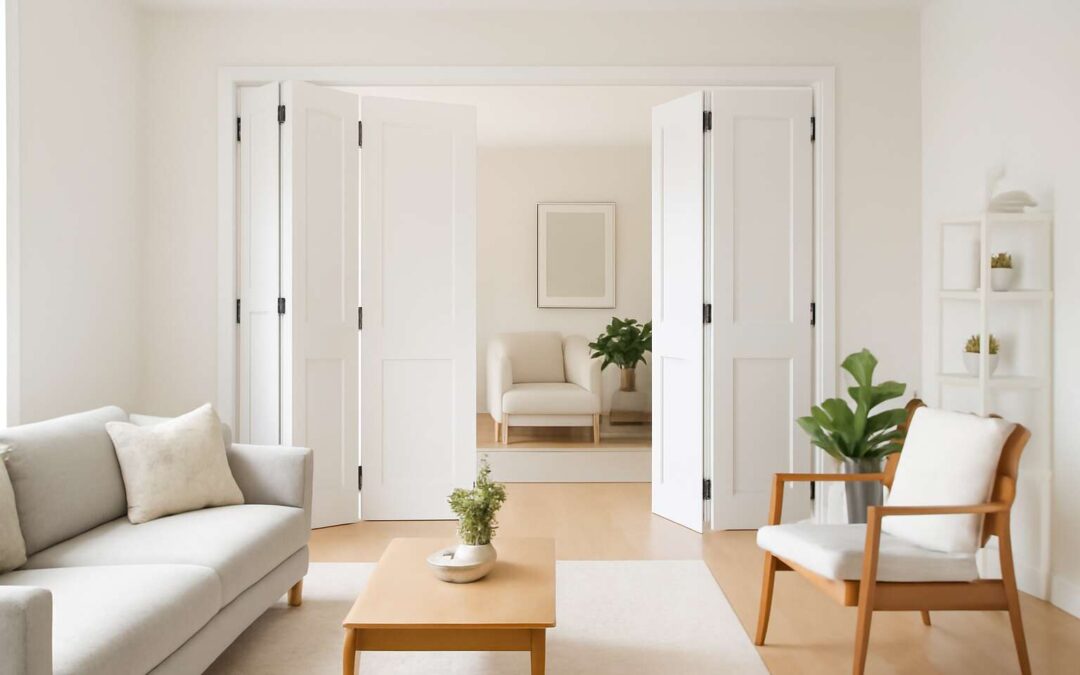
Design Concepts and Space Optimization
Impact on room layout and flow
In South Africa, open-plan dreams collide with real-world quirks—noise, privacy, and the odd draft. A recent survey found that 60% of homeowners regret rigid door layouts. Folding doors between rooms offer a clever compromise: they blur boundaries when desired and snap shut for quiet focus, turning a cramped corridor into a promenade of light and air.
Design concepts hinge on materials, framing, and proportion. Aluminium rails or timber profiles suit SA climes and aesthetics; pair panels with micro-venting gaps for airflow. When folded, walls recede into a slim line, reconfiguring the room layout and preserving flow from kitchen to lounge, sunlight to shade.
- Seamless sightlines that make spaces feel larger
- Adaptive privacy with configurable panel setups
- Low-profile hardware for quiet, durable operation
Bi-fold vs accordion vs pocket doors: options overview
South African homes crave light and sociability, yet a recent SA survey found 60% of homeowners regret rigid door layouts. Folding doors between rooms act as elastic walls, yielding to hospitality and snapping into quiet when focus is needed, turning corridors into promenades of air.
Bi-fold, accordion, and pocket doors frame the dialogue between spaces. The options unfold with different rhythms:
- Bi-fold doors: multiple panels that stack neatly to reveal a wide opening, ideal for living areas.
- Accordion doors: a single motion that folds compactly, great where space is tight.
- Pocket doors: slide into a wall, preserving floor space and sightlines when closed.
For SA climate, restrained frames and timber or aluminium rails suit every facade, while micro-venting gaps coax a respectful breeze; the result is architecture that breathes, and a space that unfolds with folding doors between rooms, softly reframing daylight and shade.
Maximizing natural light with glazing
Sixty percent of SA homeowners regret rigid door layouts, a statistic that keeps daylight at the top of every designer’s checklist. Folding doors between rooms become elastic borders, bending to hospitality yet snapping into quiet when focus is needed. I notice that when they glide open, even my morning coffee perks up. Maximizing natural light relies on glazing that is generous but respectful—think expansive panes with smartly scaled frames. In SA, restrained timber or aluminium rails harmonize with any facade, and micro-venting gaps coax a gentle breeze without drafts. The result is architecture that breathes, where corridors unfold into promenades of air and daylight.
Design concepts and space optimization emerge from a few simple ideas:
- Glass-to-wall ratio that preserves sightlines while inviting glow
- Concealed hardware to keep planes clean and uninterrupted
- Floor-plan choreography that softens thresholds and guides movement
Space-saving measurements and clearances
Sixty percent of SA homeowners regret rigid door layouts, and folding doors between rooms offer the counterweight to that regret. They become a quiet hinge between openness and retreat, a psychology of space where boundaries dissolve without surrender. I watch a room loosen as a panel glides, and the morning light leans in with a softer smile.
Design concepts for space optimization hinge on subtle measurements and thoughtful clearances. Too-tight gaps choke movement; too-wide stacks waste floor real estate. Here are key considerations:
- Leaf width and panel count balance openness with stability
- Track height and ceiling clearance for smooth operation
- Bottom gap and floor finish tolerance to prevent drafts
- Concealed hardware and wall recesses to preserve sightlines
In SA homes, restrained rails—timber or aluminum—strike harmony with any façade, while a measured choreography keeps corridors generous rather than claustrophobic. Folding doors between rooms become more than partitions; they are breathing routes through which daylight and movement negotiate the space, quietly shaping how we live.
Privacy versus openness for different rooms
In SA homes, 60% of homeowners regret rigid door layouts, and folding doors between rooms offer the counterweight to that regret. They become a quiet hinge between openness and retreat, a space where boundaries soften as light travels!
Design concepts for space optimization hinge on balancing privacy and openness with the function of each room. A room’s job—whether social, work, or rest—shapes how boundaries should behave.
- Living areas benefit from flexible boundaries that invite light and conversation.
- Workspaces crave quiet corners while maintaining daylight connections to other zones.
- Bedrooms and intimate spaces demand retreat and controlled noise.
In SA, restrained rails—timber or aluminium—preserve sightlines and frame a calm rhythm across corridors. They become more than partitions; they are breathing routes for daylight and movement.
Materials, Finishes and Aesthetic Options
Material choices: wood, aluminum, PVC and composites
Space is a story you tell with doors, and South African homes feel that truth when folding doors between rooms quietly reframe a floor plan. They invite light to travel and air to move as one, turning Cape Town and Durban corridors into pathways that feel larger and more alive.
Material choices: wood, aluminium, PVC and composites.
- Wood
- Aluminium
- PVC
- Composites
Finishes and Aesthetic Options push the mood from warm classic to sleek contemporary. Timber grains can be sealed with durable oils, while aluminium can wear a powder finish in matte or satin hues. PVC frames offer clean lines and easy maintenance, and composites blend durability with refined texture. Glass panels, color palettes, and hardware finishes—nickel, matte black or brass—let you sculpt space that feels distinctly local, resilient to SA sunshine and coastal humidity.
Finishes, textures and color coordination
Light has a language all its own in South Africa, and folding doors between rooms speak it aloud! A Cape Town designer notes that timber finished with durable oils warms a corridor, while aluminium in a matte or satin powder coat stands up to coastal sun and salt spray. Finishes, textures and colour coordination shape the mood—whether it feels softly traditional or crisply contemporary—guided by materials—timber, aluminium, PVC and composites.
Finish options to guide the eye include:
- Timber: oils, waxes or sealants that enhance grain and depth
- Aluminium: powder-coated in matte or satin for modern chic
- PVC: clean lines, low maintenance and long-lasting
- Composites: refined texture with durable resilience
Pair warm woods, cool metals and subtle coastal hues with hardware finishes—nickel, matte black or brass—to sculpt a space that feels distinctly local and alive, ready to welcome SA sunshine with grace.
Glazing options: clear, frosted, or tinted glass
In the realm where shadow and light meet, materials do more than separate space: they tell a story. Timber invites warmth; aluminium endures sea air with quiet dignity; PVC and composites offer clean lines and longevity. The choice of finishes—oiled timber, powder-coated metal, or satin resin—frames the eye as it moves from room to room.
Glazing options lend a mood. Consider:
- Clear glass for unabated line of sight
- Frosted glass for filtered privacy
- Tinted glass to tame glare
Pair this with hardware in nickel, matte black, or brass to sculpt a distinctly local atmosphere, where folding doors between rooms act as a heartbeat in a sunlit Cape Town home.
Durability and maintenance considerations
Space that breathes can transform a Cape Town home into a living shoreline of light and shadow. In the realm of materials, folding doors between rooms are more than panels; they are climate-aware companions, shaping warmth, shade, and acoustic calm as seasons shift.
Finishes and aesthetics weave mood with texture. Choose wood-like warmth, cool metal sheens, or soft resin luster to echo your interior narrative. These choices, paired with hardware accents, steer the room-to-room rhythm, from sun-splashed kitchens to hush-edited lounges.
- Response to light and shadow
- Consistency with existing palettes
- Longevity of impression in high-traffic spaces
Durability and maintenance considerations acknowledge the SA climates—salt spray, humidity, and sun. Opt for protective finishes and robust hardware to keep folding doors between rooms performing with grace.
- Longevity of finishes under SA weather
- Corrosion resistance of fittings
- Track and seal longevity and inspection cadence
Performance, Comfort and Security
Acoustic performance and sound isolation
In a South African home, heat lingers and evenings invite a breeze, and folding doors between rooms become space negotiators. They shift from barrier to bridge with a confident glide of hardware and glass, letting rooms adapt to mood and season.
Performance is about reliable operation and durable seals that shrug off sun and humidity.
- Low-friction tracks and robust hardware
- Continuous weather seals
Comfort and Security: Soft-close action and solid locking give quiet confidence, while thermal breaks keep rooms comfortable without drafts.
Acoustic performance and sound isolation arise from tight joints, careful frame detailing, and well-placed gaskets that reduce noise transfer between spaces.
Thermal efficiency and energy savings
SA homes lose cooling costs jump up to 30% when air slips through gaps, so folding doors between rooms are more than style—they’re energy maneuverers, turning a barrier into a bridge with a confident glide of hardware and glass.
- Low-friction tracks that glide with minimal effort
- Robust hardware and continuous weather seals
- Thermal breaks to cut heat transfer and reduce drafts
Performance hinges on dependable operation and durable seals that shrug off sun and humidity, while quiet, controlled action keeps interruptions to a minimum. These features translate into tangible thermal efficiency and energy savings across living areas, so comfort stays constant even on the hottest days in the country.
Hardware types: tracks, hinges, and handles
SA homes lose cooling costs jump up to 30% when air slips through gaps—folding doors between rooms turn barriers into bridges, gliding with confidence along precise hardware. Performance comes from tracks and hinges engineered for sun, humidity, and everyday use.
- Tracks for long, smooth glide
- Hinges with corrosion resistance
- Handles delivering secure locking
Comfort follows from quiet action and ergonomic interaction—handles that invite use and seals that banish drafts without fuss. A soft, predictable motion keeps living areas connected yet calm, even on the hottest days.
Security is built into the frame—robust locking points and weather seals that stay firm through coastal winds and inland heat, keeping intruders out and interiors calm.
Locking mechanisms and security features
Performance hinges on precision tracks and robust hinges that glide with ease. Folding doors between rooms rely on long, uninterrupted tracks to keep panels aligned through sun, humidity, and daily use, delivering smooth motion and dependable sealing as the day grows warmer.
Comfort flows from a quiet, predictable motion and ergonomic interaction. Soft-close options and easy-grip handles invite daily use, while seals ban drafts without fuss, so open-plan spaces stay connected yet tranquil even on hot SA afternoons.
- Soft-close rollers and guides for measured closure
- Ergonomic, corrosion-resistant handles for easy operation
- Multi-point locking with reinforced strike plates
- Weather seals that stay effective against heat and humidity
Security is built into the frame—robust locking points, reinforced jambs, and dependable weather seals that stand up to coastal winds and inland heat, keeping intruders out and interiors calm while you enjoy the flow between rooms.
Seals, weatherstripping and thresholds
Performance hinges on precision tracks that keep each panel true, even under SA heat and humidity. Folding doors between rooms demand a quiet, uninterrupted glide that preserves alignment as daily life ebbs and flows. When panels move with effortless grace, spaces feel larger, calmer, and more connected.
Comfort springs from a measured cadence and ergonomic hardware. The system benefits from controlled closure and easy-grip handles, while seals quietly ban drafts. Consider these features:
- Soft closure action that decelerates smoothly
- Ergonomic, corrosion-resistant handles
- Low-friction guides for lasting alignment
Security is built into the frame: robust locking points, reinforced jambs, and weather seals that endure coastal winds and inland heat. Thresholds provide a seamless transition, guiding movement while keeping indoor climates stable and comfortable.
Maintenance routines and long-term care
In the rhythm of a busy home, folding doors between rooms should age with grace, keeping performance steady through South Africa’s heat and humidity. Precision tracks guide every panel, preserving alignment as doors glide under daily use. A well-tuned system resists sag and misalignment, letting light and air flow remain seamless even after years of opening and closing.
Comfort emerges from a measured cadence and ergonomic hardware. Folding doors between rooms respond with soft closure action decelerating smoothly, and ergonomic, corrosion-resistant handles invite effortless operation. Low-friction guides sustain lasting alignment, so the movement feels predictably quiet and controlled, transforming everyday transitions into a calm moment rather than a gusty interruption.
Security is built into the frame: robust locking points, reinforced jambs, and weather seals that endure coastal winds and inland heat. For long-term care, consider professional assessments and finishes maintenance to keep thresholds steady and seals effective. The overall system remains stable, comfortable, and secure as seasons change.
Installation, Safety and Budgeting
Professional installation steps and timelines
When choosing folding doors between rooms, installation is less about spectacle and more about a precise, almost ritual rhythm. In South Africa, spaces can feel up to 25% larger after a well-placed partition. A smooth project tends to unfold in four serene phases: site assessment and precise measurements, a manufacturing window with delivery coordination, on-site fitting by trained technicians, and final safety checks before handover.
- Site assessment and precise measurements
- Manufacturing window and delivery coordination
- On-site fitting and alignment
- Final safety checks and handover
Safety sits at the center of every step; professional teams coordinate with structural elements, secure access, and ensure smooth operation. Budgeting follows the same current: anticipate lead times, freight, and installation costs within a single, coherent plan. The result is a seamless transition between spaces—quietly dramatic, almost magical in its efficiency.
Cost factors, warranties and budgeting tips
In South Africa, a well-placed folding doors between rooms can make spaces feel up to 25% larger, turning daily life into something quietly dramatic. Installation isn’t about spectacle; it’s a precise rhythm that respects structure, safety, and long-term performance.
Safety sits at the center of every step. Professional teams coordinate with walls, ceilings, and services, secure access, and ensure smooth operation. Trained technicians tailor hardware, tracks, and seals to regional conditions and family needs.
Budgeting for folding doors between rooms follows a single plan. Anticipate lead times, freight, and installation, then review warranty terms to protect the investment.
- Lead times and scheduling
- Freight and delivery logistics
- Professional installation and commissioning
- Warranty coverage and service options