
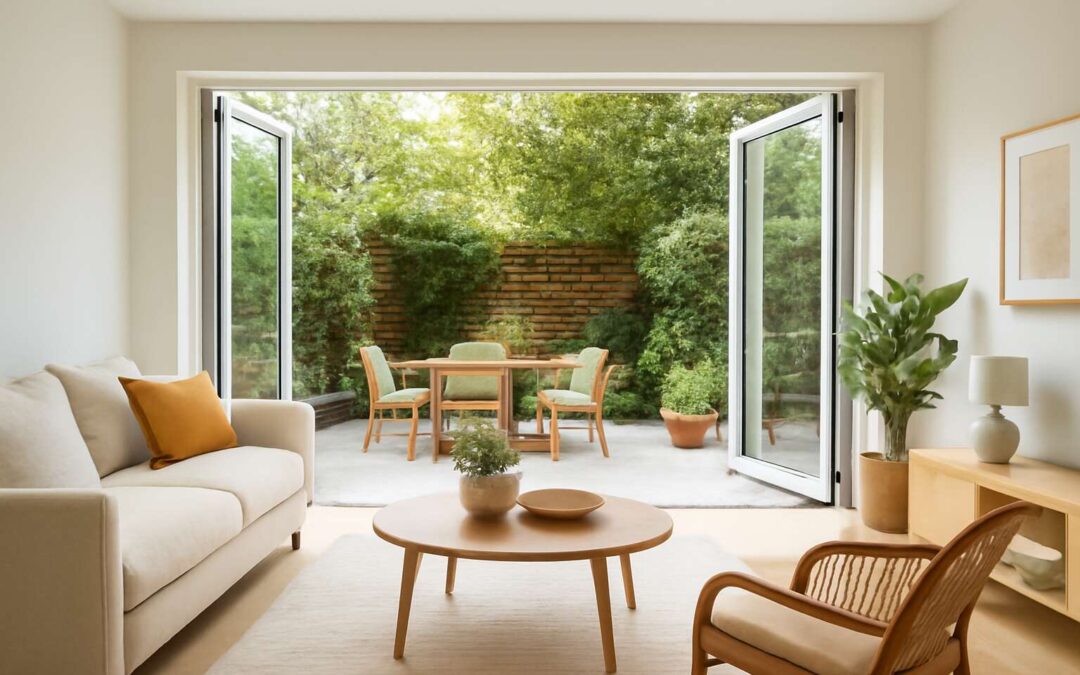
Leaf Design Fundamentals for Folding Doors
Leaf materials and finishes
“Light is the unspoken architect,” a leading South African designer once said. In SA homes, a carefully crafted folding doors leaf can transform a compact living room into a sunlit, seamless flow to the garden. The leaf design governs daylight, airflow, and the room’s mood, turning ordinary spaces into stage-worthy interiors.
Leaf materials must balance durability, climate, and beauty. Aluminium keeps lines slim; timber adds warmth; composites blend stability with cost efficiency. Finishes range from powder coatings that resist South Africa’s sun to natural veneers. The leaf integrates texture, colour, and light, shaping how the home interacts with sun and shade.
Common pairings:
- Aluminium with powder-coated neutrals
- Timber with UV-friendly veneer
- Composite with matte laminate
These combinations mould the leaf’s tactile and visual language, ensuring spaces stay dynamic in South African light.
Panel configurations and leaf count
A wall that folds is a wall that breathes. In South Africa, a carefully designed opening can turn a compact living room into a sunlit veranda, shaping daylight and mood with a single gesture. Leaf count is the quiet architect of space, balancing thresholds, circulation, and view.
Panel configurations range from a single operable leaf to expansive multi-panel runs. They dictate how the room welcomes light, directs airflow, and responds to movement through the space.
- Single leaf for intimate openings
- Bi-folds (two leaves) for generous but controlled flow
- Tri-folds (three leaves) for extended reveals
- Four-panel stacks for uninterrupted panoramas
- Five-panel or larger sequences for seamless indoor–outdoor drama
The folding doors leaf becomes the star in aspirational South African homes, guiding movement and light. Designers weigh track layout, hinge style, and stacking when determining leaf count, crafting transitions that feel inevitable rather than engineered.
Thermal performance and energy efficiency
South African homes shed up to 30% of heated or cooled air through imperfect openings, a leak you can see on the electricity bill. The folding doors leaf, designed with thermal awareness, acts as a living boundary that breathes with daylight rather than fighting it.
Thermal performance hinges on frame construction, glazing, and seals. Look for thermal breaks in the frame, multi-point weather seals, and glazing with low-emissivity coatings. These features reduce heat transfer, constrain unwanted drafts, and keep a room comfortable through changing seasons.
- Thermal breaks and insulating frames
- Low-E or reflective glazing to minimise solar gain
- Quality gaskets and smooth operation to maintain airtight seals
In South Africa’s sun-drenched climate, well-designed openings balance daylight with cooling needs, supporting energy efficiency without sacrificing openness.
Acoustic properties and privacy
Chiaroscuro in timber and glass, the space between rooms is a muttering corridor where sound either hisses or hushes. The folding doors leaf, with a careful balance of mass and seal, becomes a living boundary that protects intimacy without imprisoning daylight.
Acoustic performance rests on resilient seals, dense leaf construction, and the quiet we coax from air gaps. A well-tuned leaf dampens footsteps, mutes conversation, and preserves privacy even as neighbours’ laughter travels faintly beyond the frame.
- Seamless gaskets that maintain airtight seals without binding
- Massive leaf construction and glazing that dampens airborne noise
- Strategic sealing at meeting rails to prevent drafts and rattle
In South Africa’s light, these choices render rooms that breathe with you, not at you—an arcane promise of privacy made tangible.
Hardware, Tracks and Operation
Track system types and installation tips
Hardware is the quiet workhorse of folding doors leaf—robust handles, rollers, and locks that stand up to South Africa’s climates. Quality components reduce wear, improve security, and keep daily use free of squeaks and snagging.
Tracks control how the leaf moves and how it speaks to wind and rain. Bottom-running tracks stay grounded for stubborn weather, while top-hung guides offer a slimmer interior profile. Some systems fold into a pocket or stack neatly to the side.
- Bottom-running track: sturdy, weather-resistant and easy to maintain
- Top-hung track system: smooth operation and sleek lines
- Pocket or parallel track: maximizes space when open
Installation considerations should prioritise precise alignment, compatible seals, and corrosion-resistant finishes for South Africa’s coastal and inland regions. Engage a professional to confirm clearance and warranty support; a well-fit track system reduces noise and energy leakage.
Hinges, pivots and alignment
Quiet hardware is the compass that guides daily life—watch a folding doors leaf glide from open to shut and hear the difference a well-made system makes. In SA homes, robust metalwork withstands salt, dust and the daily rhythm with grace.
Hardware is the quiet workhorse: sturdy handles, smooth rollers, and secure locks that resist corrosion and wear. Good components reduce squeaks, improve security, and keep daily use effortless, even after years of South African sun and humidity. That folding doors leaf deserves durable hardware.
Tracks determine rhythm and silhouette. Bottom-running options stay grounded in blustery weather, while top-hung designs offer a slimmer interior line. For space-starved rooms, pocket or parallel tracks tuck the leaf away with elegance.
Hinges, pivots and alignment are where the magic proves itself. Precision in mounting and appropriate seals support coastal and inland regions; a professional checks clearance and ensures flawless door action, quiet and confident.
Soft-close and damping mechanisms
As one installer puts it, ‘If it doesn’t glide, it doesn’t belong.’ In SA homes, hardware that stays quiet and predictable keeps daily life running smoothly—especially with folding doors leaf at the heart of a room. Durable handles, corrosion-resistant locks and smooth rollers resist salt, dust and wear, ensuring reliable performance through years of sun and humidity!
Tracks shape the rhythm and silhouette. Bottom-running stays grounded in blustery weather, while top-hung offers a slimmer interior line. In compact spaces, pocket or parallel tracks tuck the leaf away with quiet elegance.
- Quiet, smooth operation
- Durable damping options
- Low-maintenance hardware
Operation soft-close and damping mechanisms finish the experience. Adjustable dampers cushion the glide, prevent slams and extend life across coastal and inland climates. Regular maintenance—dust removal, screw tightening, seal checks—keeps the leaf quiet and confident every day.
Maintenance and wear patterns
One installer’s line sticks: “If it doesn’t glide, it doesn’t belong.” For folding doors leaf in SA homes, quiet hardware keeps daily life moving. Durable handles, corrosion-resistant locks, and smooth rollers resist salt, dust and wear, ensuring reliable performance through sun and humidity.
Tracks set the pace and silhouette. Bottom-running systems stay grounded in blustery weather, top-hung lines stay slim indoors. In tight spaces, pocket or parallel tracks tuck the leaf away with quiet elegance.
Operation maintenance keeps the leaf quiet. Adjustable dampers cushion the glide and slow down slams, extending life in coastal and inland climates. Wear patterns show as minor misalignment or worn rollers; regular checks catch these early.
Security considerations for folding doors
Quiet hardware is the spine of any folding doors leaf. In SA homes, hinges, handles and locks endure salt spray, dust and daily use. Corrosion-resistant finishes keep the leaf gliding and the latches secure, while precise tolerances prevent squeaks. When hardware stays steady, life moves with you.
Tracks set the glide’s tempo. Bottom-running systems anchor the leaf in blustery coastal air; top-hung lines slim the profile indoors. For tight spaces, pocket or parallel tracks vanish from view, delivering quiet elegance as the leaf tucks away. In all cases, choose tracks with sealed, corrosion-resistant surfaces to resist dust and humidity.
Operation security is the unseen lock in performance. Beyond smooth motion, consider hardware that deters intrusion, reinforced strike plates, and anti-lift devices; these protect privacy in every season.
Space Planning and Interior Design with Folding Leaves
Room transitions and openness
Spaces that breathe are not an accident. In South African homes, a folding doors leaf can turn a small kitchen into a sunlit living zone in moments, inviting morning light to wander from room to room. One study notes homes with flexible layouts enjoy up to 30% more usable space.
In space planning, the leaf becomes a design instrument, shaping room transitions with a simple glide. It invites openness when entertaining and wraps snugly around intimate evenings, guiding light and air through a home with a gentle, architectural rhythm.
Stylists weave color, texture, and furniture silhouettes around the leaf to keep a calm, cohesive story—bold accents against neutral backdrops, or soft, sun-washed hues that mirror the outdoors. When the leaf slides open, it isn’t just a door; it’s a threshold that redefines space and mood.
Frame styles and architectural integration
Space planning in South African homes becomes a choreography of light and movement with the folding doors leaf. The glide reshapes transitions, turning a compact kitchen into a sunlit living zone or sealing a snug corner without crowding sightlines. Architecturally, it sits within framing that mirrors the house’s rhythm—from flush, nearly invisible reveals to bold, sculptural jambs—so the door reads as an intentional element, not a passive barrier.
- Flush minimalist reveals that read as wall extensions
- Industrial jambs that contrast with soft textures
- Timber accents that warm metal and glass
Inside, color and texture are choreographed around the leaf, supporting focal points and flow. I love how these frames converse with the light, inviting warmth and depth to linger. When open, it welcomes air through the home; when closed, it frames a quiet, sophisticated mood.
Color and finish coordination with decor
Space in a South African home is a living thing—open it up and it breathes. A design-savvy room can feel up to 25% larger when you choreograph light and movement with the folding doors leaf as the pivot. It’s not just a door; it’s a dynamic stage for daily life.
Color and finish coordination with decor means the leaf reads as part of the interior, not a detachable afterthought. Pair warm timber with soft textures for coastal warmth, or let cool metal reflections glide with linen to carve a modern mood that stays legible in all light. Climate-ready finishes keep character year-round in SA homes.
To harmonize spaces, consider these cues:
- Warm neutrals that reflect morning sun and rebalance spaces
- Bold accents to define zones when the leaf is open
- Texture play to catch light without glare
With South African interiors, the folding doors leaf becomes a portable palette—frame, finish, and décor converge to produce a room that reads as deliberate, generous, and distinctly local.
Safety and child-friendly design
South African homes crave daylight and social cadence. I’ve seen a folding doors leaf choreograph indoor-outdoor flow, turning compact lounges into shared stages and making spaces feel up to 25% larger when opened to the patio. It’s not just architecture; it’s theatre for everyday life.
- Finger-safe profiles that protect tiny hands.
- Low-threshold designs for stroller and toy-free transitions.
- Robust, durable hardware that stays quiet as kids explore.
Smart space planning leans on sightlines, rhythm, and texture to keep rooms legible as light shifts. The leaf rises to the occasion, guiding movement without shouting, turning safety into a design virtue that enhances everyday South African living.
Sizing and clearance for smooth operation
South African homes crave daylight and social cadence, and spaces feel up to 25% larger when the folding doors leaf opens to the patio. It turns rooms into theatres of light, where movement glides and boundaries soften.
Space planning becomes a quiet script: leaf sizes, stack depth, and threshold heights still the actors, guiding sightlines and ensuring smooth operation as day shifts to dusk.
- Leaf width and total leaf count match primary circulation
- Track clearance and threshold height ensure effortless glide
- Furniture clearance preserves unbroken sightlines and access
Texture and rhythm shape the transition; the folding doors leaf offer openness with restraint, a design virtue in a sunlit South African home.
Material Choices and Sustainability
Wood vs aluminum vs UPVC leaf materials
In SA, the folding doors leaf material you pick isn’t just about looks—it’s a climate decision. Wood, aluminium, and UPVC each tell a different sustainability story: wood offers warmth and carbon storage when responsibly sourced; aluminium lasts long and is highly recyclable; UPVC delivers weather resistance with lighter upkeep.
The right choice balances local availability, lifecycle impact, and regional weather—far more than upfront cost.
- Life-cycle thinking: compare production, use, and end-of-life fate across the three options.
- Local sourcing and transport to reduce the carbon footprint.
- End-of-life options: recycling streams and second-life reuse.
Ultimately, the leaf you choose quietly shapes your home’s future in SA’s climate.
Sustainable sourcing and certifications
SA homes feel energy savings as a chorus in winter. The folding doors leaf you choose is a quiet commitment to climate, weaving sustainable sourcing and certifications into a single, elegant arc that binds forests, factories, and future reuse.
Sustainable sourcing and certifications matter for every opening. Look for:
- FSC-certified timber or equivalent responsibly sourced materials
- PEFC or SA Green Building Council certifications and GreenTag labels
- High recycled-content and full recyclability for metal and plastic components
- Low-VOC finishes and adhesives to keep indoor air pristine
End-of-life options—recycling streams and second-life reuse—ensure the project returns to the light of reuse.
Surface treatments and weather resistance
In SA homes, up to 40% of energy escapes through unsealed openings, a price tag whispered by winter radiators. The folding doors leaf you choose becomes a quiet commitment to climate—an elegant arc that links forests, factories, and future reuse.
Material choices drive weather resistance without sacrificing beauty. Aluminium and timber composites offer resilience under sun and rain, while UPVC remains stable in heat. Surface treatments—powder coatings, anodizing, low-VOC finishes—keep colours vibrant and indoor air pristine.
- Powder-coated aluminium resists UV fade and corrosion
- Low-VOC finishes protect indoor air quality
- Termite-resistant timber treatments extend life in SA summers
Recyclability and lifecycle costs
In South Africa, the clash of sun and wind makes every home a study in balance. The folding doors leaf that adorns a threshold becomes more than décor—it shapes comfort and longevity. Aluminium, timber composites, and UPVC offer elegance with enduring resilience.
- End-of-life recyclability for aluminium and timber composites
- Low-embodied-energy manufacturing
- Durable coatings that extend service life
Long-term economics hinge on low maintenance, reduced energy leakage, and preserved resale appeal. The folding doors leaf becomes a graceful investment that ages with its surroundings and invites reuse.
Maintenance requirements and care
In SA, up to 40% of heat escapes through threshold gaps, making a folding doors leaf a climate ally rather than a liability. The right material mix matters as much as the grille on a safari hat: it shields you from sun and wind while aging gracefully.
Aluminium, timber composites, and UPVC offer elegance with enduring resilience and a distinct sustainability profile:
- Low embodied energy manufacturing
- End-of-life recyclability
- Durable coatings that resist weathering
Maintenance and care hinge on preserving protective finishes, guarding seals, and accommodating SA’s gusty afternoons. With durable coatings and thoughtful design, the folding door leaf ages with its surroundings rather than fighting them, preserving its value and character.
Installation, Maintenance and Warranty
Professional vs DIY installation considerations
A door is the stage for climate, and folding doors leaf should perform with a practiced poise. A seasoned installer often quips that precision beats drama when panels slide, seal, and stack neatly. Done right, the installation saves energy, silences drafts, and makes the home feel effortlessly expansive.
- Track alignment and frame plumb are verified before fixings.
- Hardware compatibility and operation under real day-to-day use.
- Warranty terms and service intervals that protect your investment.
Maintenance and warranty hinge on regular checks and honest assessments of wear. Dust and seals deserve seasonal care; misalignment can void warranty if a DIY repair alters hinge geometry. For many homes, a professional service preserves performance and coverage—and keeps the fold in line.
Pre-installation measurements checklist
That inner poise of a folding doors leaf starts at measure and ends with a seal. “Precision beats drama when panels slide, seal, and stack,” quips an old-school installer, and the sentiment sticks. In South Africa’s homes, meticulous pre-installation measurements set energy savings and smooth operation in motion.
Pre-installation measurements checklist:
- Opening width and height at three points (top, middle, bottom)
- Plumb and level across jambs
- Track alignment and sill clearance
- Hardware compatibility and hinge spacing
With those numbers in hand, the fit becomes predictable—minimizing rework, preserving warranty coverage, and ensuring a clean, effortless transition between space and room. When the leaf is aligned from day one, maintenance is smoother and warranty terms stay intact.
Maintenance routines and common issues
Two in five service calls trace back to track misalignment and stiff operation. That statistic isn’t doom; it’s a nudge to get the fit right from day one. A properly fitted folding doors leaf glides with minimal effort, keeps weather out, and ages well in South Africa’s climate!
Installation matters for lasting performance. Secure mounting points, verify plumb, and ensure balanced motion for the leaf. Leave room for the seal to compress as it slides into place, then test operation before final trim.
Maintenance routines should be brisk and predictable in a busy home.
- Track cleanliness and hinge wear
- Seal condition and weather-stripping status
- System alignment and smooth travel
- Professional servicing cadence
Warranty coverage hinges on following routines and proper installation. DIY tweaks may void warranties; professional servicing preserves cover and keeps you compliant with warranty terms in South Africa.
Warranty coverage and claim tips
Forty percent of service calls trace to track misalignment, so fit is king from day one. A folding doors leaf should glide with a feather touch and keep weather out. Installation focus: secure mounting points, verify plumb, and balance leaf motion. Leave room for seal compression as the leaf slides into place, then test before final trim.
- Mounting integrity and alignment
- Plumb and level verification
- Balanced leaf motion
- Seal compression considerations
Maintenance should be brisk and predictable in a busy home. Keep your folding doors leaf in top shape by monitoring track cleanliness and hinge wear, seal condition and weather-stripping status, and system alignment and travel smoothness.
- Track cleanliness and hinge wear
- Seal condition and weather-stripping status
- System alignment and smooth travel
- Professional servicing cadence
Warranty coverage hinges on following routines and proper installation. DIY tweaks may void warranties; professional servicing preserves cover and keeps you compliant with warranty terms in South Africa. For claims, prepare documentation and use the SA-approved channel.
- Documentation: receipts and service logs
- Photographic records of leaf, frame and seals
- Submit through the SA-approved warranty channel
Warranty terms for different leaf materials
In South Africa, 40% of service calls trace to track misalignment—installation is king from day one. The folding doors leaf should glide with ease and resist weather. Wood swells with humidity and needs acclimation; aluminium stays stable with robust fixings; UPVC handles moisture but needs expansion room and UV guards.
- Wood: acclimate and seal
- Aluminium: robust fixings
- UPVC: allow for expansion
Maintenance should be brisk and material aware. Wood may require refinishing; aluminium is simple to wipe; UPVC prefers mild cleaning and no harsh solvents. Regular checks of movement and seals keep the leaf operating smoothly.
- Wood: refinishing cadence
- Aluminium: surface care
- UPVC: gentle cleaning
Warranty terms hinge on installation discipline. In SA, DIY tweaks may void cover; professional servicing preserves terms. For claims, keep receipts and photos, and submit through the SA-approved warranty channel.